Quick Sift
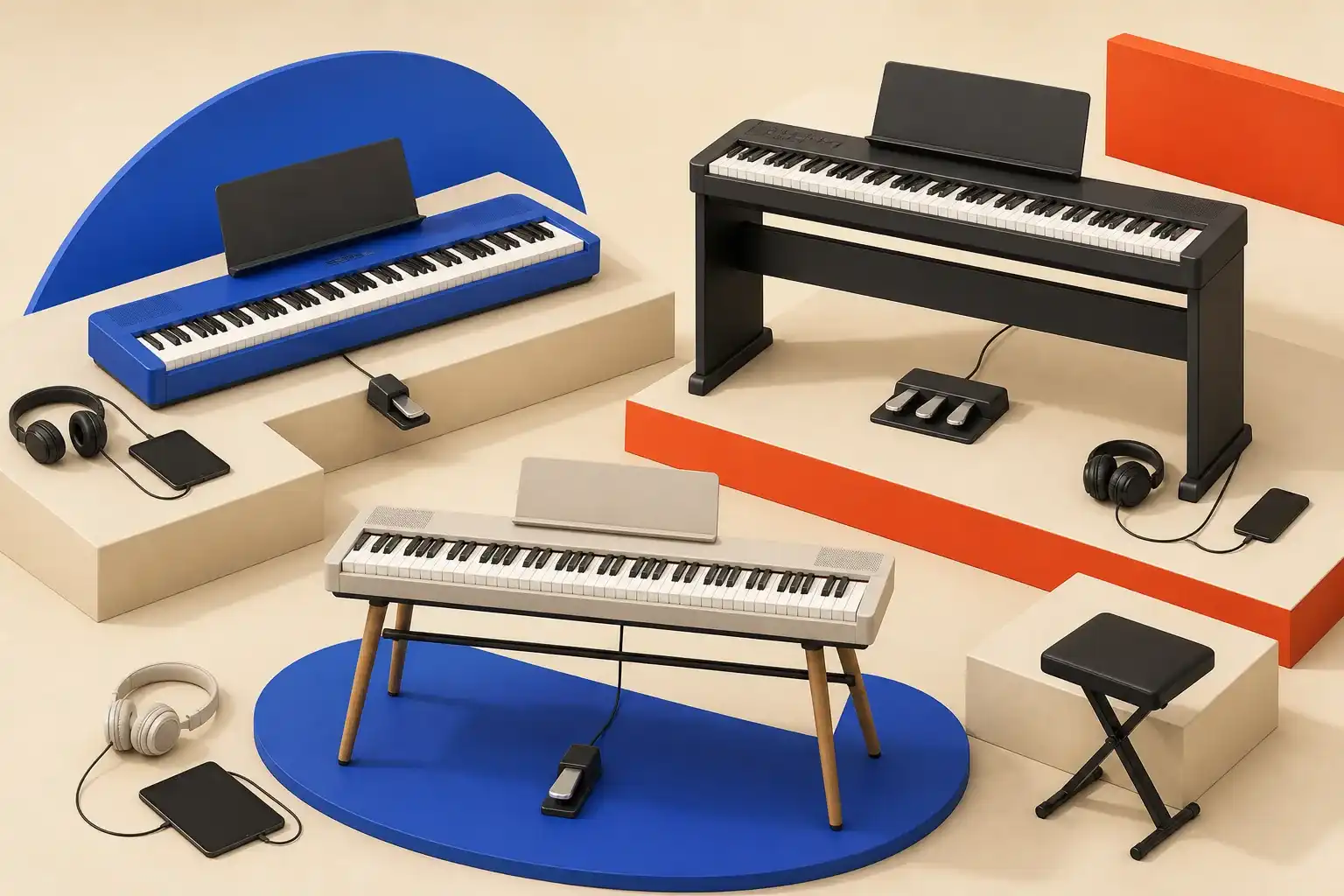
Choose P-71 for a basic older Yamaha after a support check, FP-10 for Roland PHA-4 action and Bluetooth MIDI, or P-145BT for current Yamaha support and Bluetooth audio.
Options for different needs
These are different-fit reference options, not a ranking. BestSift earns a commission from qualifying purchases through these links. Our selections are research-based, not hands-on test results.
Yamaha P-71
88 GHS keys · simple controls
Roland FP-10
PHA-4 action · Bluetooth MIDI
Yamaha P-145BT
GHC action · Bluetooth audio
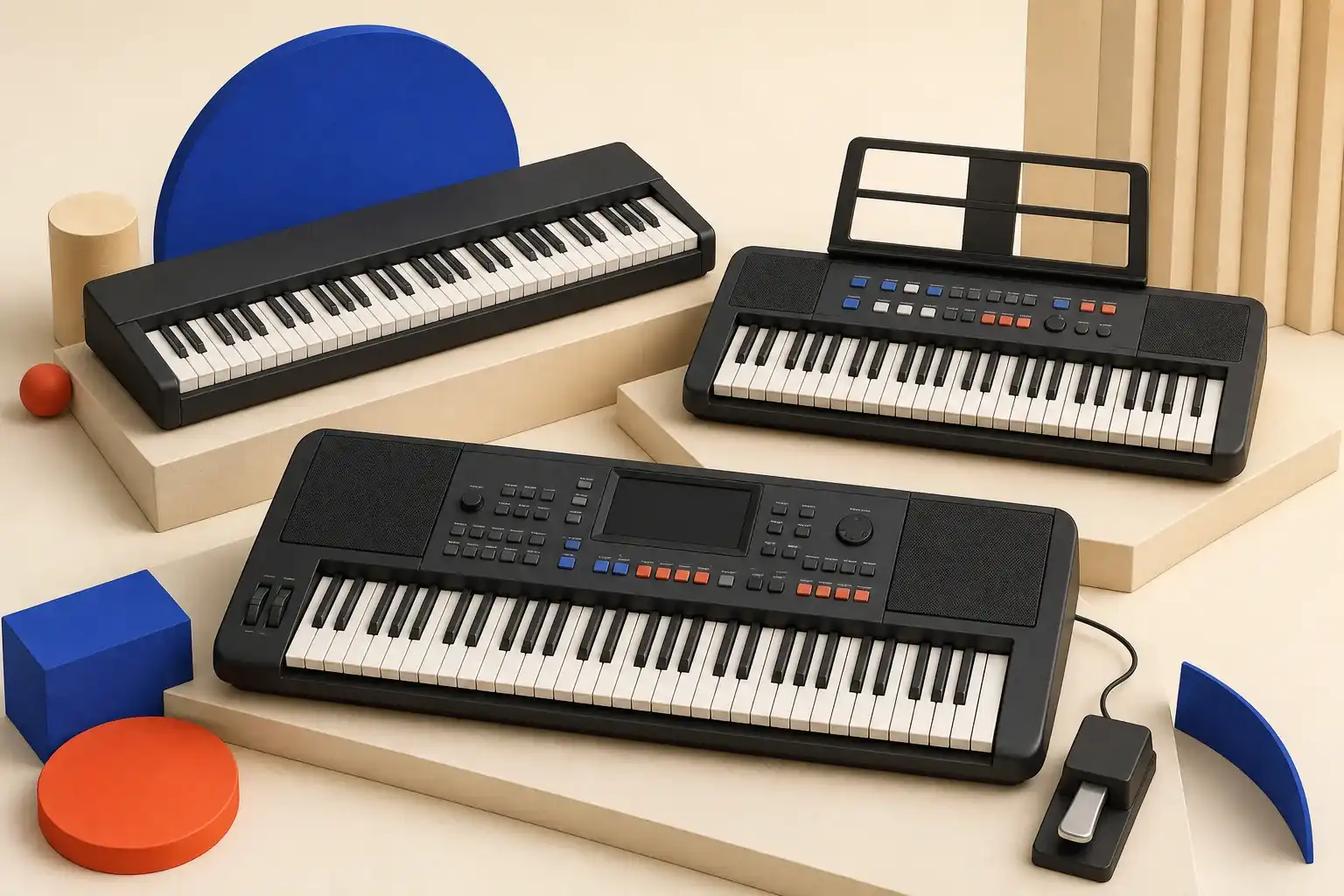
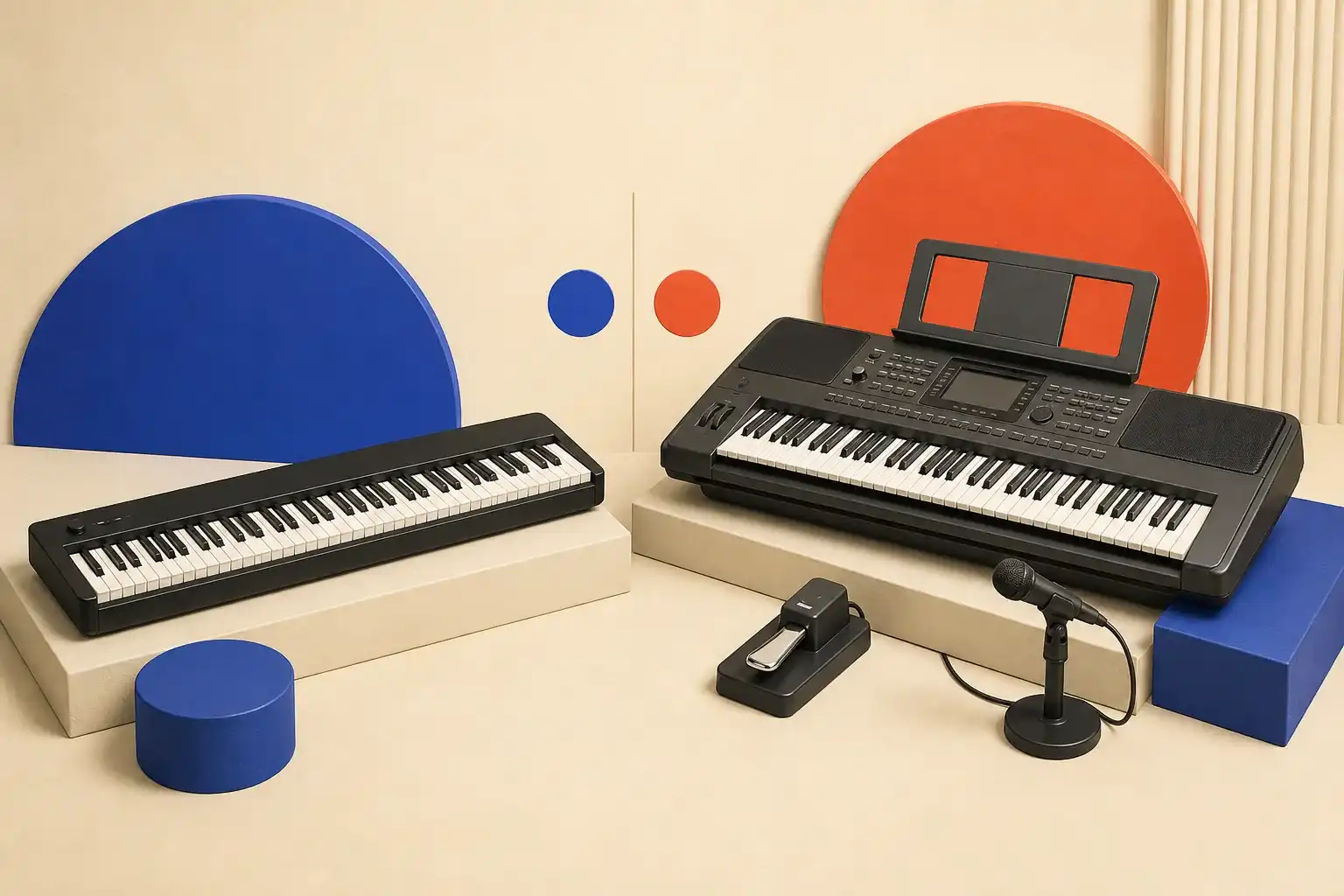
Yamaha P-71, Roland FP-10, and Yamaha P-145BT are compact digital pianos for buyers who want a full 88-key weighted keyboard without committing to a permanent console. P-71 is an older Amazon-exclusive Yamaha with a deliberately simple feature set. FP-10 is Roland’s entry model built around its PHA-4 Standard action and app connectivity. P-145BT is a current slim Yamaha with Graded Hammer Compact action, USB audio/MIDI, and Bluetooth audio.
BestSift has not hands-on tested these instruments. Key action and speaker character are tactile and audible preferences that specifications cannot settle. Use this research to narrow the field, then play the candidates through their own speakers and headphones if possible.
Comparison table
| Decision point | Yamaha P-71 | Roland FP-10 | Yamaha P-145BT |
|---|---|---|---|
| Keys | 88 Graded Hammer Standard | 88 PHA-4 Standard with escapement and ivory feel | 88 Graded Hammer Compact |
| Piano focus | Ten voices and simple function-key controls | SuperNATURAL piano engine and app-accessible settings | Ten voices, CFIIIS piano, Damper Resonance |
| Wireless role | None documented in P-71 manual | Bluetooth MIDI; no Bluetooth headphones | Bluetooth audio; app connection requirements vary |
| USB | USB-to-host MIDI | USB computer connection | USB-to-host audio and MIDI |
| Accessory path | Basic sustain switch; generic stand planning | Optional compatible stands and pedals; basic FP-10 output limits | L-100 stand and LP-5A three-pedal unit supported |
| Best fit | Simple legacy Yamaha at a compelling, supportable listing | Action-focused practice and MIDI apps | Current Yamaha platform and wireless play-along audio |
Yamaha P-71: basic, familiar, and older
The P-71 offers an 88-key Graded Hammer Standard keyboard, ten voices, 64-note maximum polyphony, dual voice, duo mode, metronome, reverb, wired headphones, sustain footswitch input, and USB-to-host MIDI. Its control method relies heavily on holding a function button while pressing labeled keys. That keeps the front panel uncluttered but makes the quick-operation chart important.
Its strongest case is simplicity. A student can select piano, set a metronome, attach a sustain switch, and practice without navigating an arranger interface. The P-71 manual remains available from Yamaha, but the model is no longer a central current product page. That changes the buying calculation: confirm the listing is new, the nameplate says P-71, the specified power adapter is present, and warranty service applies to the seller and region.
P-71 lacks the modern app and audio features of the other two. USB MIDI can send performance data to compatible software, but it is not described as a USB audio interface. It also lacks dedicated line outputs; the headphone connector may be the practical audio path, subject to the manual and the input requirements of external equipment.
Choose it when the exact older model is sold with clear support and its straightforward piano practice is all that is required. Avoid paying a nostalgia or scarcity premium when newer instruments provide a better-supported accessory and connection path.
Roland FP-10: action and MIDI-app emphasis
Roland’s FP-10 uses the same PHA-4 Standard action family found in the FP-30X, including hammer action, escapement, and an ivory-feel surface. Its SuperNATURAL piano engine, 88 full-size keys, Twin Piano mode, metronome, USB, Bluetooth MIDI, and compatibility with Roland’s current piano app make it an appealing practice instrument.
Bluetooth must be interpreted precisely. Roland states that FP-10 does not support Bluetooth headphones or earphones; wired headphones are required. Bluetooth MIDI can exchange performance and control data with compatible apps, but it does not carry ordinary audio. This distinction matters for shoppers searching “Roland FP-10 Bluetooth headphones.”
FP-10’s compact cabinet and relatively modest speaker system suit personal practice. Its connection set is less flexible than FP-30X for external amplification. A buyer planning rehearsals, recording, or small performances should inspect the exact output scheme before assuming the entry model scales like its larger sibling.
The FP-10 is the strongest candidate here when key action and MIDI-enabled practice are priorities and the limited outputs are acceptable. Test repeated notes, quiet key return, and the transition from soft to loud playing. Mechanical key noise is more noticeable through headphones because the speakers no longer mask it.
Yamaha P-145BT: current slim Yamaha with audio streaming
P-145BT uses Yamaha’s 88-key Graded Hammer Compact action and CFIIIS sampled piano voice. Yamaha specifies 64-note polyphony, ten voices, Damper Resonance, dual and duo modes, 7-watt-per-channel amplification, USB audio/MIDI, one standard headphone jack, sustain input, and support for the L-100 furniture stand and LP-5A pedal unit.
Built-in Bluetooth audio lets a phone stream songs through the piano speakers for play-along practice. It is not the same as Bluetooth MIDI, and wireless headphones are not presented as a low-latency performance solution. Smart Pianist and Rec’n’Share functions use compatible device connections described by Yamaha; confirm the cable and adapter required by the actual device.
At about 24.5 pounds and just over 52 inches wide, the P-145BT is easy to relocate within a home but still requires two secure hands and a clear route. Rear speaker placement and Yamaha’s wall-oriented sound design should not be blocked by pillows or a deep shelf. The current accessory family offers a clearer route from tabletop practice to a furniture-style setup with three pedals.
Choose P-145BT when current Yamaha documentation, Bluetooth play-along audio, USB audio/MIDI, and a defined stand/pedal upgrade matter. It is a weaker choice if the player prefers the Roland action after trying both or needs independent line outputs.
Action, polyphony, and sound: what matters in practice
Weighted action is a category, not a single feel. Yamaha GHS, Yamaha GHC, and Roland PHA-4 have different pivot behavior, surface, resistance, and repetition. A five-minute store test should include soft repeated notes, scales near the back of the keys, chords at low volume, and controlled crescendos—not only loud playing with dramatic reverb.
Sixty-four-note polyphony is normally sufficient for elementary and intermediate solo practice, but layered voices, sustained passages, duo functions, or incoming app data can consume notes faster. FP-10’s engine and FP-30X step-up may offer different headroom; compare the documented model, not a family reputation.
Speaker wattage does not reveal tonal balance. Listen at the quiet level actually used in the room. A piano that sounds impressive at high volume may have less satisfying bass or dynamics at apartment volume. Headphones can provide detail but should be kept at a safe listening level.
Pedals and stand compatibility
Included switch pedals generally provide on/off sustain. Classical technique may eventually need half-damper response and three pedals. P-145BT has a documented LP-5A path with its matching stand. Roland offers model-compatible accessories, but confirm that the FP-10 supports the desired continuous pedal behavior and that the stand does not block connectors.
Generic X-stands vary widely. Choose one rated for the instrument, lock every mechanism, center the piano, and set a height that keeps forearms roughly level. Furniture stands improve stability but reduce portability. A padded bench is not automatically ergonomic; correct height and firm support matter more than thickness.
Connections and recording
USB MIDI records notes, timing, velocity, pedal actions, and controller data; it does not necessarily record the piano’s actual sound. USB audio carries sound. P-145BT documents both. FP-10 and P-71 workflows should be checked against their manuals and the recording application.
For external speakers, do not assume every headphone output behaves like a professional line output. Verify cable type, stereo routing, level control, and whether plugging in mutes the internal speakers. Keep audio and power cables strain-free and away from pedals and walking paths.
Purchase checklist
- Play the actions in person or buy only with a practical return window.
- Confirm exact model, serial label, regional power supply, and warranty coverage.
- Decide whether Bluetooth MIDI, Bluetooth audio, USB MIDI, or USB audio is actually needed.
- Check wired headphone plug size and use a suitable, non-straining adapter.
- Plan stand width, bench height, pedal position, music-rest clearance, and cable routing.
- Verify the desired three-pedal or half-damper accessory before choosing the instrument.
- Inspect every key, speaker, port, button, pedal, and adapter during the return period.
- Consider teacher requirements and the likely upgrade path before buying an accessory bundle.
P-71 remains a workable minimalist piano when its age and seller support are understood. FP-10 is the action-and-MIDI choice. P-145BT is the current Yamaha route with Bluetooth audio and USB audio/MIDI. A learner will benefit more from the action they practice consistently and an ergonomic setup than from a feature they never use.
Research shortlist
Products to consider
As an Amazon Associate I earn from qualifying purchases.These are research-based examples—not hands-on test results, promises of availability, or absolute rankings.
Yamaha P-71
An older Amazon-exclusive Yamaha for focused piano practice, provided its exact model, included adapter, and return support are confirmed.
Roland FP-10
A compact entry piano for players prioritizing a textured hammer action, wired headphones, and app/MIDI control over audio streaming.
Yamaha P-145BT
A current slim Yamaha for beginners who want weighted keys, USB audio/MIDI, app support, and wireless play-along audio.
Sources reviewed
BestSift favors standards bodies, public agencies, official manuals, and primary manufacturer documentation. Accessed August 13, 2026.