Quick Sift
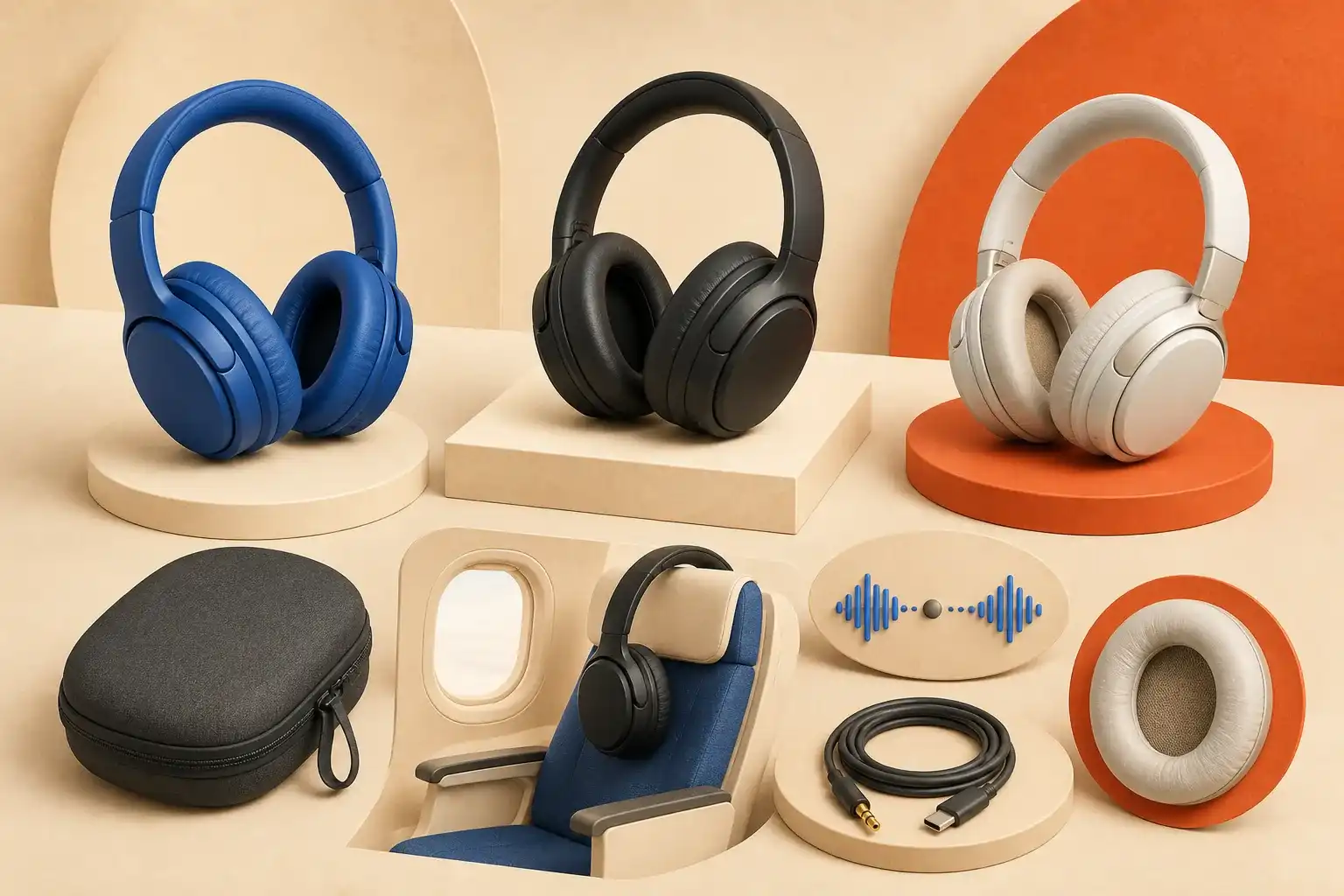
For travel and office use, prioritize long-session comfort, effective low-frequency cancellation, transparency controls, microphone performance in your real environment, and a wired fallback. Active noise cancellation is not certified hearing protection unless the product is specifically labeled with an appropriate noise-reduction rating.
Options for different needs
These are different-fit reference options, not a ranking. BestSift earns a commission from qualifying purchases through these links. Our selections are research-based, not hands-on test results.
Sony WH-1000XM5 headphones
Lightweight fit · call processing
Bose QuietComfort Ultra Headphones
Folding design · travel-friendly storage
Active noise-canceling headphones use microphones and signal processing to reduce parts of the sound reaching the ear. They are particularly effective against steady low-frequency noise such as aircraft cabin rumble, ventilation, and some engine sounds. They are less absolute against nearby speech, clattering dishes, alarms, and sudden high-frequency events.
That means “best ANC” is not a complete buying category. A travel headset must also fit for hours, pack safely, reconnect reliably, let you hear when appropriate, and function when its battery is low. A work headset must place your voice clearly in a room full of competing sound. Comfort and use case decide whether the cancellation matters.
Fit comes before feature count
Over-ear headphones distribute force across the headband and pads. Clamp keeps the seal stable but can create jaw or temple pressure. Headband padding can feel plush yet concentrate load on a small spot. Weight alone does not predict comfort; distribution, head shape, glasses, hair, heat, and ear-cup depth all contribute.
Check whether your ears contact the driver cover or pad seam. Contact that seems minor for five minutes can become painful over a flight. Glasses can break the acoustic seal and increase pressure at the arms. Some pads trap heat quickly, while breathable surfaces may isolate less or wear differently.
If possible, wear the headset for at least the length of a normal call. Move your jaw, look down, and walk. A headset that slips during motion may require more clamp; one that creates immediate hotspots is unlikely to improve after hours.
Earbuds avoid a headband and pack smaller, but canal pressure and tip fit are individual. A poor seal reduces bass and cancellation. Multiple tip sizes help, while people with sensitive ears may still prefer over-ear designs. Neither format is universally more comfortable.
Understand what ANC can remove
Feedforward microphones monitor outside sound; feedback microphones monitor sound inside the cup; hybrid systems combine approaches. Implementation matters more than microphone count. Strong cancellation can create a pressure sensation for some users, and aggressive processing may respond awkwardly to wind or movement.
Compare cancellation in the environment you care about. Aircraft and train noise emphasize steady low frequencies. An office includes speech and keyboard transients. Walking outdoors introduces wind and the need for awareness. A single showroom demonstration cannot represent all three.
Transparency or ambient mode deliberately passes external sound through microphones. Useful controls allow quick switching, predictable volume, and limited wind amplification. This mode can aid conversation and announcements, but it is still electronic. Remove headphones when situational awareness is critical.
ANC headphones should not be treated as hearing protection for hazardous workplaces unless they are specifically rated and labeled for that role. NIOSH states that active cancellation in ordinary headphones is not hearing protection unless labeled with a Noise Reduction Rating. Use appropriate protective equipment where required.
Safe listening still depends on level and time
Cancellation can make it easier to listen at a lower volume because background rumble is reduced. It does not make unlimited loud playback safe. CDC guidance emphasizes turning volume down, moving away from loud sources, taking breaks, and using suitable protection when noise cannot be avoided.
Avoid using playback to overpower external noise. Set volume in a quiet environment, then enable cancellation before increasing it. Device volume-limit features and listening-level reports can provide useful reminders, though their accuracy depends on the hardware and calibration.
Ringing, muffled hearing, pain, or difficulty understanding speech after listening are reasons to stop and seek appropriate medical advice. A consumer buying guide cannot diagnose hearing health.
Calls require a different microphone problem
The microphones used to cancel sound for your ears are not automatically good at transmitting your voice. Call processing must identify speech while reducing wind, traffic, keyboard noise, reverberation, and nearby voices. Excessive suppression can make speech watery or cut off quiet syllables.
Consider where calls happen. In a quiet room, many headsets sound adequate. For commuting, wind handling matters. In a shared office, rejecting the person beside you matters. For long meetings, sidetone—the ability to hear your own voice—can reduce the tendency to speak too loudly.
Bluetooth profiles and application behavior affect call sound. Some computers reduce playback quality when the headset microphone is active because of the bidirectional audio mode in use. A dedicated USB adapter or wired connection can provide more consistent behavior for work, but compatibility varies. Check the exact operating system and conferencing tools.
Multipoint connection can keep a laptop and phone connected, yet handoffs are not identical across products. Test how it handles an incoming phone call during computer playback and whether switching can be disabled when it becomes disruptive.
Travel features that earn their space
A folding hinge reduces case size but adds a moving part. A nonfolding design can be robust while consuming more bag volume. Compare the protected case, not the bare headphone, and check whether controls can be pressed accidentally inside it.
Airline entertainment may require a cable. Confirm whether the headset can play passively with no power, whether ANC works while wired, and which plug or adapter is included. USB audio may work with some devices but should not be assumed from a USB charging port.
Battery claims depend on volume, codec, ANC, calls, and temperature. Quick charging is useful only when the required charger and cable are available. Check whether the battery is replaceable or serviceable and what functionality remains after it degrades.
For flying, keep battery-powered electronics accessible and follow airline and FAA guidance. Inspect swollen, damaged, overheated, or recalled batteries and stop using affected products.
Controls, apps, and ownership
Physical buttons are easier to find by touch and less prone to rain or accidental swipe input; touch controls can offer quick gestures but vary with gloves and movement. Ensure there is a direct way to pause, change mode, and control calls without opening an app.
Apps may provide equalization, firmware, control mapping, and account-based features. Determine whether basic operation or updates require registration. Hearing personalization and spatial processing can be useful preferences, but should not distract from comfort, seal, microphone reliability, and stable connection.
Replacement pads extend useful life. Pads compress, absorb skin oils, and change the seal; proprietary parts can disappear. Check availability and the replacement procedure. A hard-to-replace battery or hinge can define lifespan more than a new wireless codec.
Buying checklist
- Wear the headset long enough to identify clamp, heat, and contact points.
- Compare ANC in steady rumble, speech, wind, and sudden sound.
- Check transparency mode and quick awareness controls.
- Listen to microphone samples from an environment like yours.
- Verify multipoint and computer call behavior.
- Confirm wired playback, powered wired ANC, and included connectors.
- Compare protected travel size and hinge design.
- Check pad, battery, and service availability.
- Keep playback volume moderate; do not substitute consumer ANC for rated hearing protection.
The right noise-canceling headphones should reduce friction as much as noise. They remain comfortable through the trip, keep your voice intelligible, give you control over awareness, and still have a workable plan when a pad, battery, or connection ages.
Decision snapshot
Test a finalist as a complete work-and-travel system. Wear glasses if you normally do, join a call from the computer you use, switch between phone and laptop, and listen at a moderate level in steady background noise. Pack the protective case in your usual personal item and confirm the cable can connect to the equipment you expect. Check whether replacement pads are sold directly and whether basic playback continues without an account or app. Stronger cancellation cannot rescue temple pressure, unreliable microphone handoffs, or a battery with no service path. If you need protection around hazardous sound, stop comparing consumer ANC rankings and select properly labeled protective equipment for the exposure instead.
Research shortlist
Products to consider
As an Amazon Associate I earn from qualifying purchases.These are research-based examples—not hands-on test results, promises of availability, or absolute rankings.
Sony WH-1000XM5 headphones
A lightweight over-ear reference for travelers balancing active noise cancellation, microphone processing, and a non-folding earcup design.
Sony WH-1000XM5 support and specifications
Bose QuietComfort Ultra Headphones
An alternative for shoppers prioritizing strong noise-control modes and a folding travel design, with fit checked before purchase.
Bose QuietComfort Ultra support
Sources reviewed
BestSift favors standards bodies, public agencies, official manuals, and primary manufacturer documentation. Accessed August 12, 2026.