Quick Sift
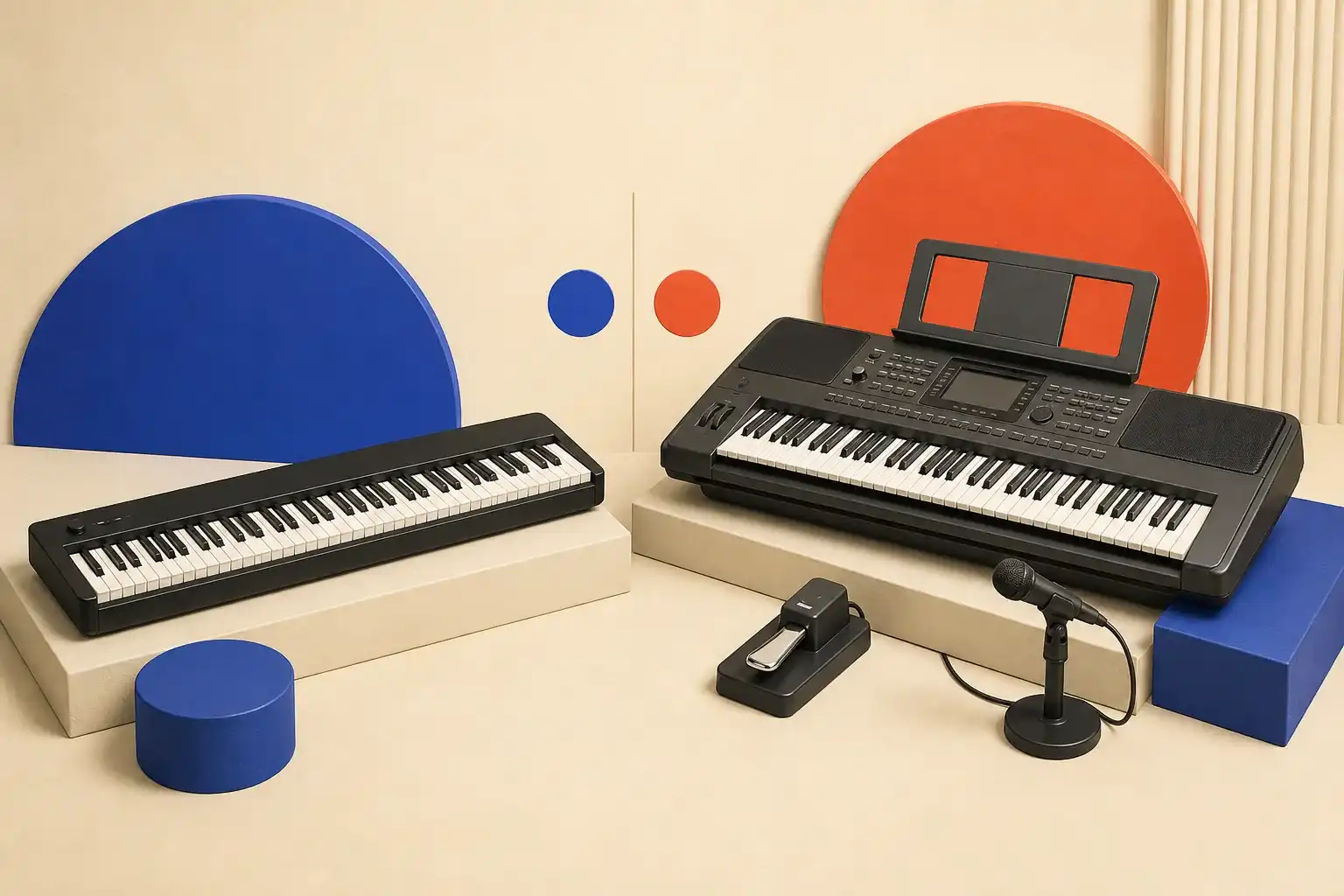
Choose FP-30X for a lighter piano-first setup with dedicated outputs, or DGX-670 for accompaniment, display, microphone, score, and deeper recording features.
Options for different needs
These are different-fit reference options, not a ranking. BestSift earns a commission from qualifying purchases through these links. Our selections are research-based, not hands-on test results.
Roland FP-30X
PHA-4 action · 32.7 lb
Yamaha DGX-670
630 voices · 263 styles
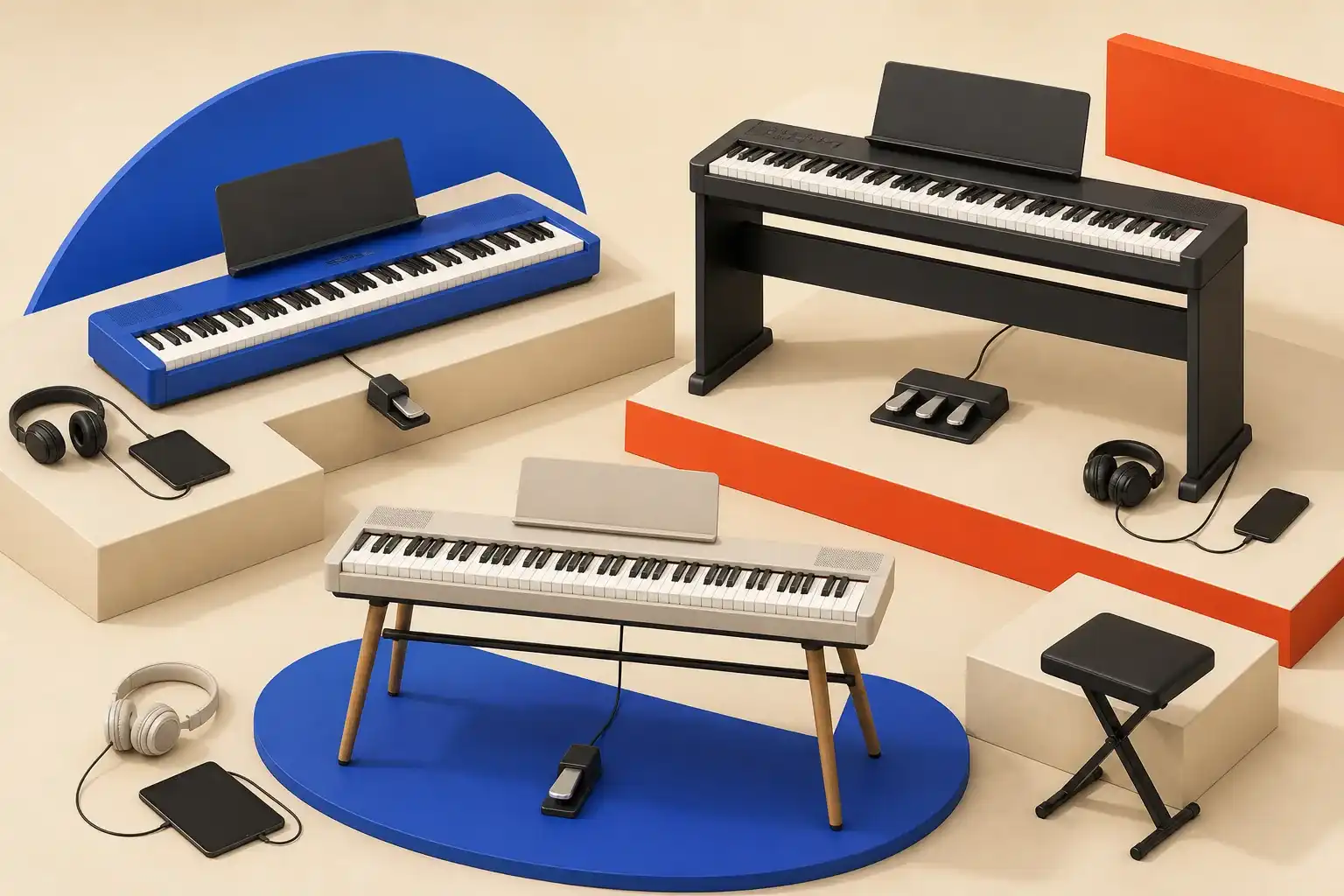
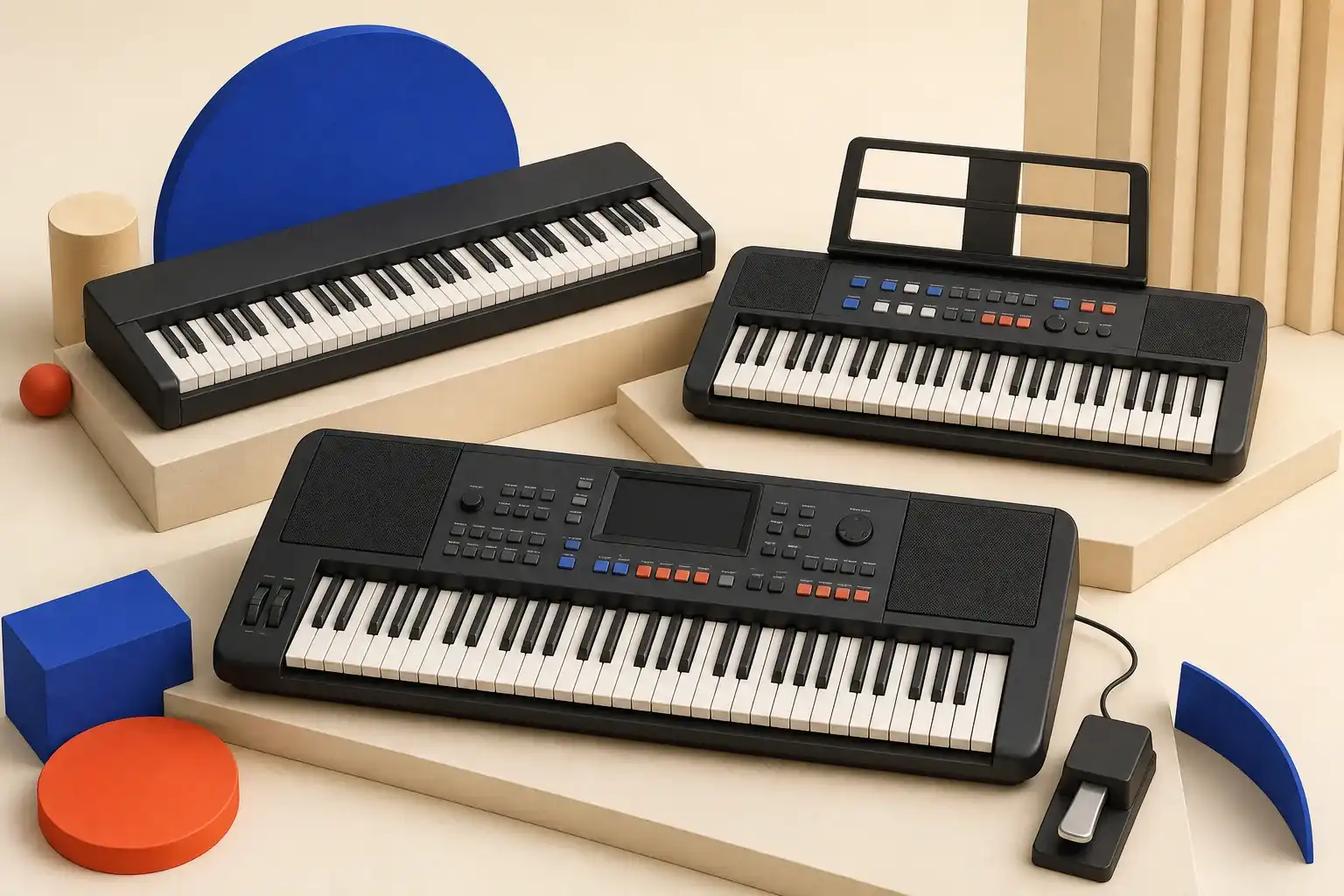
Roland FP-30X and Yamaha DGX-670 both put 88 weighted keys, piano sounds, speakers, headphones, pedals, apps, and recording options into portable cabinets. They are not direct feature-for-feature rivals. FP-30X is a streamlined piano with enough connectivity for lessons, production, and small performances. DGX-670 is a feature-rich arranger with a color display, hundreds of voices, automatic accompaniment, microphone input, score functions, and multi-track creative tools.
BestSift has not hands-on tested either instrument. This guide uses current manufacturer pages and manuals. Action feel, speaker voicing, interface speed, and acoustic-piano realism remain personal judgments that deserve an in-person trial.
Core differences
| Decision point | Roland FP-30X | Yamaha DGX-670 |
|---|---|---|
| Design center | Portable digital piano | Weighted arranger and entertainment piano |
| Keyboard | 88-key PHA-4 Standard | 88-key Graded Hammer Standard |
| Sound workflow | Focused piano and instrument tones | 630 voices and 263 accompaniment styles |
| Speakers | 11W × 2 system | Larger multi-driver speaker system |
| Connections | Dedicated L/Mono and R outputs, USB audio/MIDI, Bluetooth audio/MIDI | Mic input, aux input, USB audio/recording, pedal and accessory connections |
| Cabinet weight | About 32.7 lb with music rest | About 47 lb without stand |
| Best fit | Piano practice, lessons, portable performance | Singing, arranging, backing-band practice, home creation |
Roland FP-30X: focused piano with useful outputs
FP-30X combines Roland’s SuperNATURAL piano engine with the 88-key PHA-4 Standard action, which includes hammer action, escapement, and an ivory-feel surface. Roland specifies 256-note maximum polyphony, 56 tones accessible from the instrument, 22 watts of total speaker amplification, two headphone connectors, dedicated quarter-inch L/Mono and R outputs, USB computer and memory ports, Bluetooth audio and MIDI, and support for the KSC-70 stand and KPD-70 three-pedal unit.
The interface keeps day-to-day piano functions close at hand while moving deeper settings into button combinations or the Roland Piano App. That balance suits a player who mainly selects a piano, adjusts ambience, starts a metronome, layers or splits sounds, and records practice. Dedicated outputs make connection to powered speakers or a mixer more straightforward than routing a headphone socket.
FP-30X is reasonably portable for an 88-key hammer-action instrument, but 32.7 pounds plus a case, stand, pedal, and cables is not a casual one-hand carry. The optional furniture stand turns it into a stable home piano; a folding stand preserves mobility. The basic included switch pedal is not equivalent to the three-pedal board.
Choose FP-30X for piano lessons, headphone practice, app-assisted learning, USB recording, and occasional amplified use. It is a weaker fit for a singer who wants a microphone input, a player who depends on hundreds of automatic styles, or someone who wants a large visual interface without using an app.
Yamaha DGX-670: arranger depth behind weighted keys
DGX-670 uses Yamaha’s 88-key Graded Hammer Standard action and CFX piano sampling, then builds a full arranger environment around it. Yamaha documents 630 instrument voices, 263 automatic accompaniment styles, a color display, Bluetooth audio, USB audio playback and recording, microphone input, score and lyric display, registration memory, playlist functions, multi-part recording, and compatibility with optional furniture stand and three-pedal units.
That breadth changes how the instrument is used. A singer can connect a microphone, apply vocal features, and perform with accompaniment. A songwriter can build arrangements from styles, record parts, and save registrations. A learner can display compatible scores and use chord-based backing. A solo pianist who never uses those systems will carry a larger, heavier instrument and navigate more controls for little return.
At roughly 47 pounds, DGX-670 is transportable in the technical sense but better treated as a movable home workstation. Add the music rest, stand, pedal unit, bench, microphone, and cables, and it becomes a dedicated station. Check doorways, stair turns, stand assembly area, and floor protection. Two people are sensible for frequent moves.
Choose DGX-670 when accompaniment, singing, arranging, display-guided operation, and integrated speakers will be used every week. It is less suitable when the priority is a clean piano interface, frequent travel, or a minimal recording rig.
Key action and piano practice
Both actions are graded, meaning lower keys feel heavier than upper keys, but PHA-4 and GHS differ in geometry, texture, repetition, and perceived resistance. Specifications cannot identify a universal winner. A player should test soft repeated notes, trills, scales near the key fallboard, wide chords, and pedal-controlled legato.
FP-30X’s 256-note polyphony provides generous headroom for layered tones and sustain. DGX-670’s allocation must support piano, accompaniment, layered voices, and recorded parts, so Yamaha’s detailed specifications and actual workflow matter more than an isolated polyphony number. Note stealing is rarely the first limitation for a beginner; action comfort and consistent practice matter sooner.
For serious classical study, ask the teacher about action expectations, pedal needs, and whether the interface encourages focused practice. The DGX can be placed in a piano-centered mode, but its many features remain physically present. FP-30X can expand through apps, yet its onboard interface is intentionally smaller.
Speakers, outputs, and room use
FP-30X’s two 11-watt amplifiers and stereo speakers are designed for home practice and small spaces. Its dedicated outputs allow external amplification while retaining a clear connection plan. DGX-670 uses a larger multi-speaker system intended to support piano, styles, and vocals. Watt figures from different enclosure designs should not be compared as a direct loudness or quality score.
Listen at the actual room volume. Place either instrument on a solid stand with speaker openings clear. A wall, corner, desk, or hollow stand changes bass and reflections. For apartment practice, wired headphones avoid wireless latency and reduce room sound, but mechanical key noise still travels through the stand and floor.
When connecting a PA, powered monitors, or recorder, start with levels low and use the manual’s recommended outputs. Balanced and unbalanced inputs are not interchangeable assumptions. Keep audio cables away from power adapters where practical and secure every cable against trips.
Bluetooth, USB, apps, and subscriptions
FP-30X supports Bluetooth audio for streaming play-along music and Bluetooth MIDI for compatible control or music apps. Yamaha lists Bluetooth audio on DGX-670 and provides USB-based audio and data functions. Neither feature means generic Bluetooth headphones will provide suitable low-latency live monitoring.
Confirm device operating-system compatibility, required Yamaha or Roland app version, account needs, cable adapters, and whether a desired function is free. Apps change faster than piano hardware. The instrument should remain useful if a phone is replaced or an app is discontinued.
USB storage and computer connections have format and capacity rules. Follow the manual before moving files or updating firmware. Do not disconnect power or media during an update or write operation.
Pedals, stands, and complete cost
FP-30X can pair with Roland’s KSC-70 and KPD-70 for a furniture-style three-pedal setup. DGX-670 has its own matching stand and pedal options. These accessories are not cross-compatible simply because the connectors look similar. Confirm the exact instrument and stand model before ordering.
The complete system may include a stand, bench, three-pedal unit, headphones, dust cover, USB cable, device adapter, microphone, powered speakers, case, and surge protection. A lower instrument price can disappear when a seller bundle includes unsuitable accessories that must be replaced.
Maintenance and long-term support
Keep liquids, dust, direct sun, heating vents, and unstable furniture away. Clean only as the manufacturer directs; household sprays can damage key surfaces and displays. Unplug by the plug rather than pulling the cord. Allow the instrument to reach room temperature after cold transport before powering it.
Back up user registrations and recordings in documented formats. Keep a record of model and serial number. Before the return period ends, test every key at multiple velocities, speakers, headphones, USB, Bluetooth, pedal inputs, buttons, display, microphone input if applicable, and external outputs.
Purchase checklist
- Choose between a piano-first workflow and an arranger/singing workstation.
- Play both actions with the same headphones and similar piano settings.
- Measure width, depth, music-rest height, bench space, pedal area, and cable bend.
- Decide whether the instrument will move often; include case and accessory weight.
- Verify stand and three-pedal compatibility by exact model number.
- List every required input and output for lessons, recording, PA use, or microphone work.
- Confirm app, USB device, file format, and phone-adapter requirements.
- Test all hardware and save a backup during the return window.
FP-30X is the more direct digital-piano purchase: compact controls, a strong action specification, modern wireless functions, and dedicated outputs. DGX-670 is the more capable self-contained music station: weighted piano, backing band, singer tools, display, and deeper creation features. Buy the workflow that already matches the player, because unused arranger depth is weight and complexity, while missing arranger functions are difficult to add cleanly later.
Research shortlist
Products to consider
As an Amazon Associate I earn from qualifying purchases.These are research-based examples—not hands-on test results, promises of availability, or absolute rankings.
Roland FP-30X
A portable piano-first instrument with dedicated line outputs, Bluetooth audio/MIDI, and an optional furniture stand and three-pedal board.
Yamaha DGX-670
A heavier arranger-piano workstation for singing, backing-band practice, score display, and recording where feature depth justifies more space.
Sources reviewed
BestSift favors standards bodies, public agencies, official manuals, and primary manufacturer documentation. Accessed August 13, 2026.