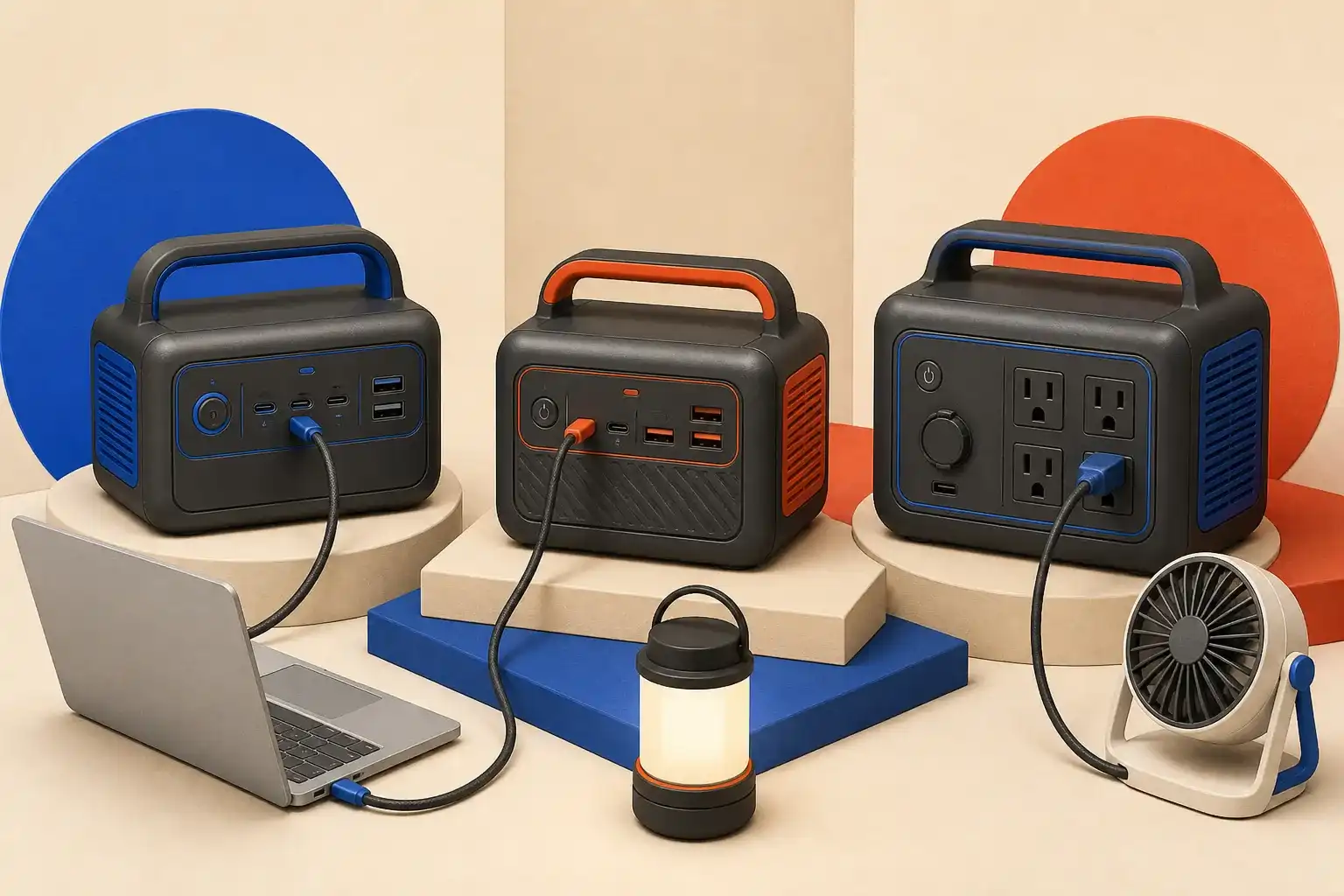
Quick Sift
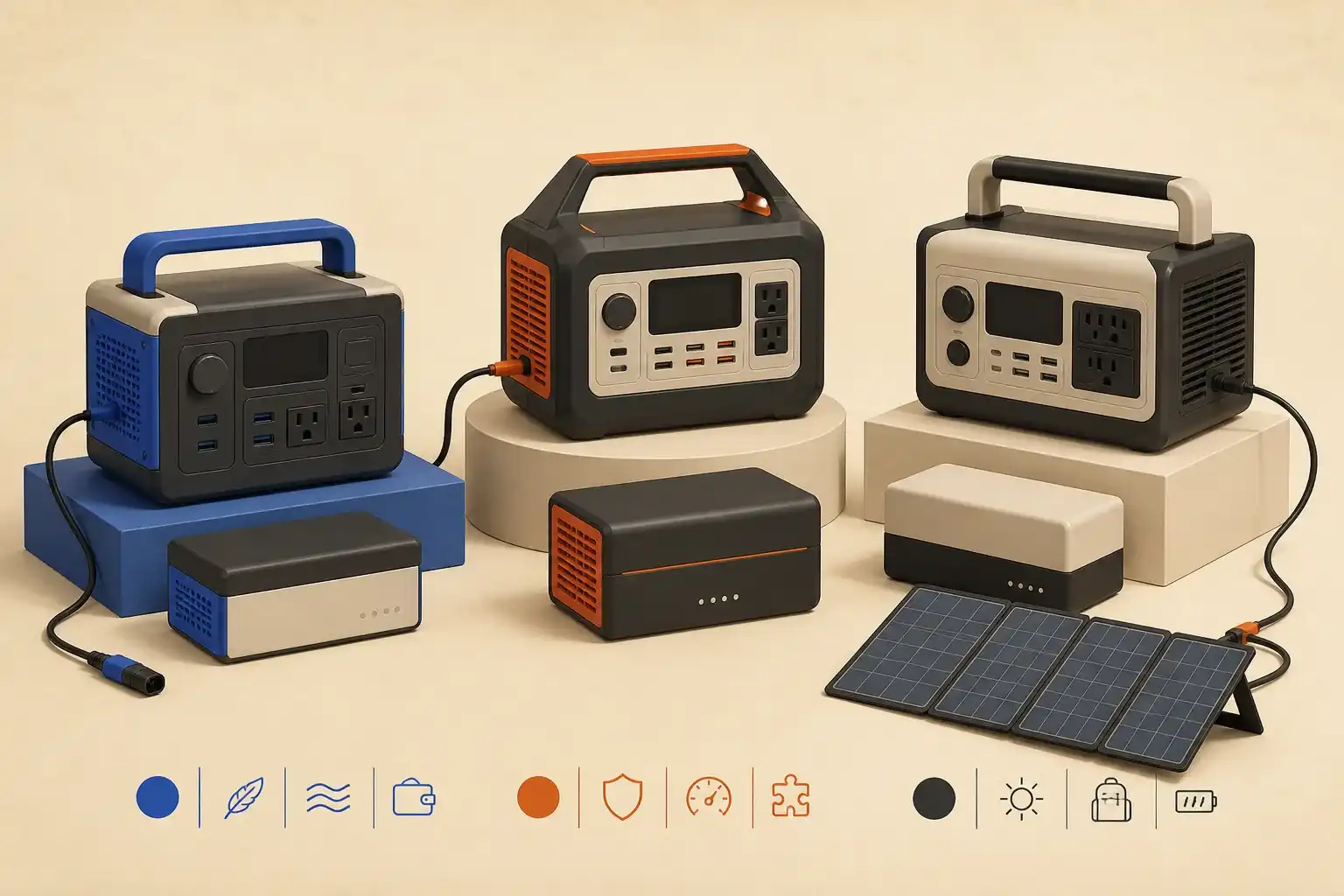
Choose the EcoFlow RIVER 2 when minimum weight is the priority, the Anker SOLIX C300 when a USB-C-centered port layout fits your devices, or the BLUETTI Elite 30 V2 when 600W continuous AC output and a faster stated UPS transfer matter more than the lowest carry weight.
Options for different needs
These are different-fit reference options, not a ranking. BestSift earns a commission from qualifying purchases through these links. Our selections are research-based, not hands-on test results.
EcoFlow RIVER 2
256Wh · 300W · 7.7 lb
Anker SOLIX C300
288Wh · 300W · seven ports
BLUETTI Elite 30 V2
288Wh · 600W · 9.5 lb
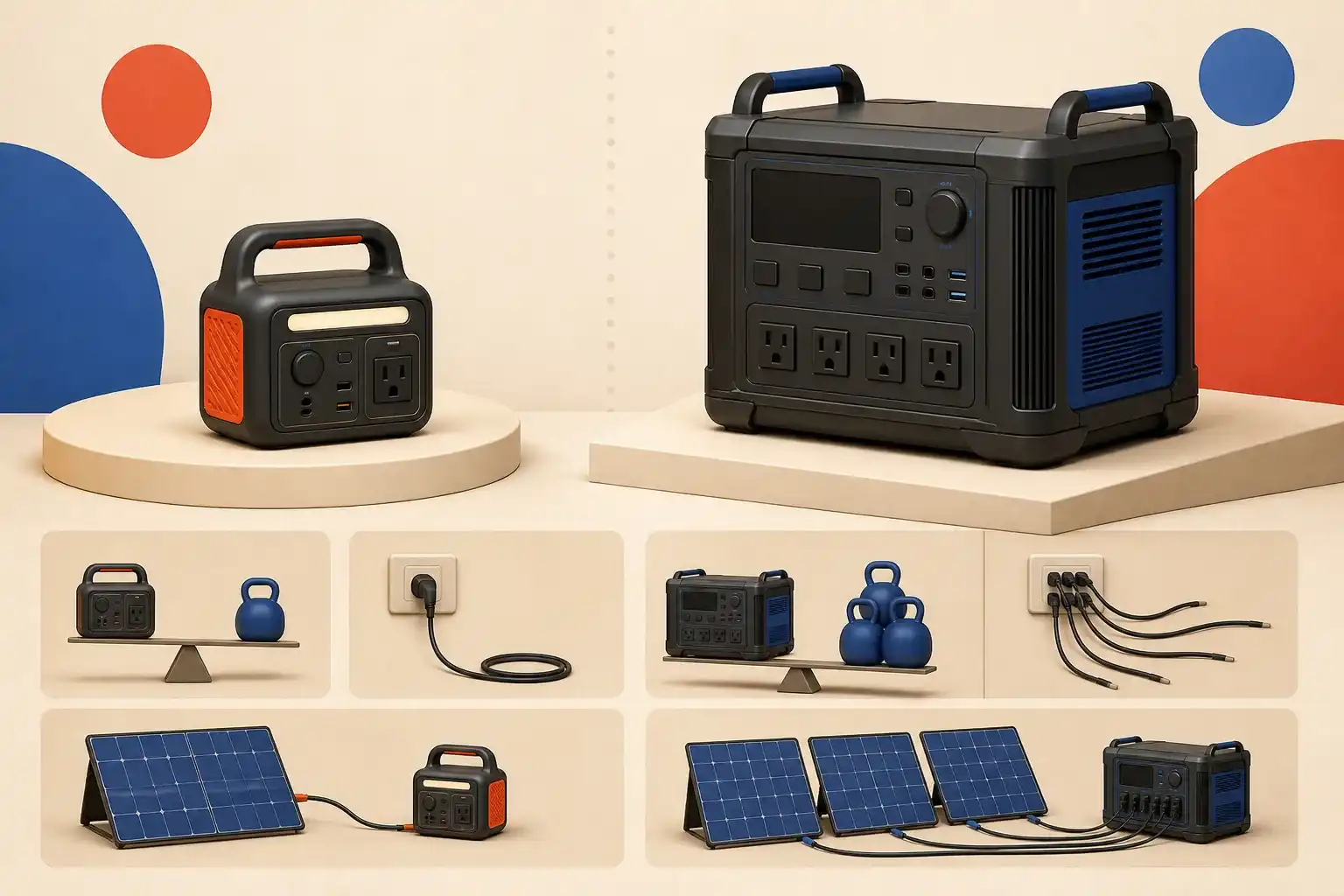
The EcoFlow RIVER 2, Anker SOLIX C300, and BLUETTI Elite 30 V2 occupy the compact end of the portable power station market. Their batteries are close in nominal size: 256Wh for the RIVER 2 and 288Wh for both the C300 and Elite 30 V2. That similarity can hide the real purchase decision. The three stations differ in continuous AC output, USB-C capability, number and type of ports, stated transfer time, physical weight, and the controls used to manage charging and standby behavior.
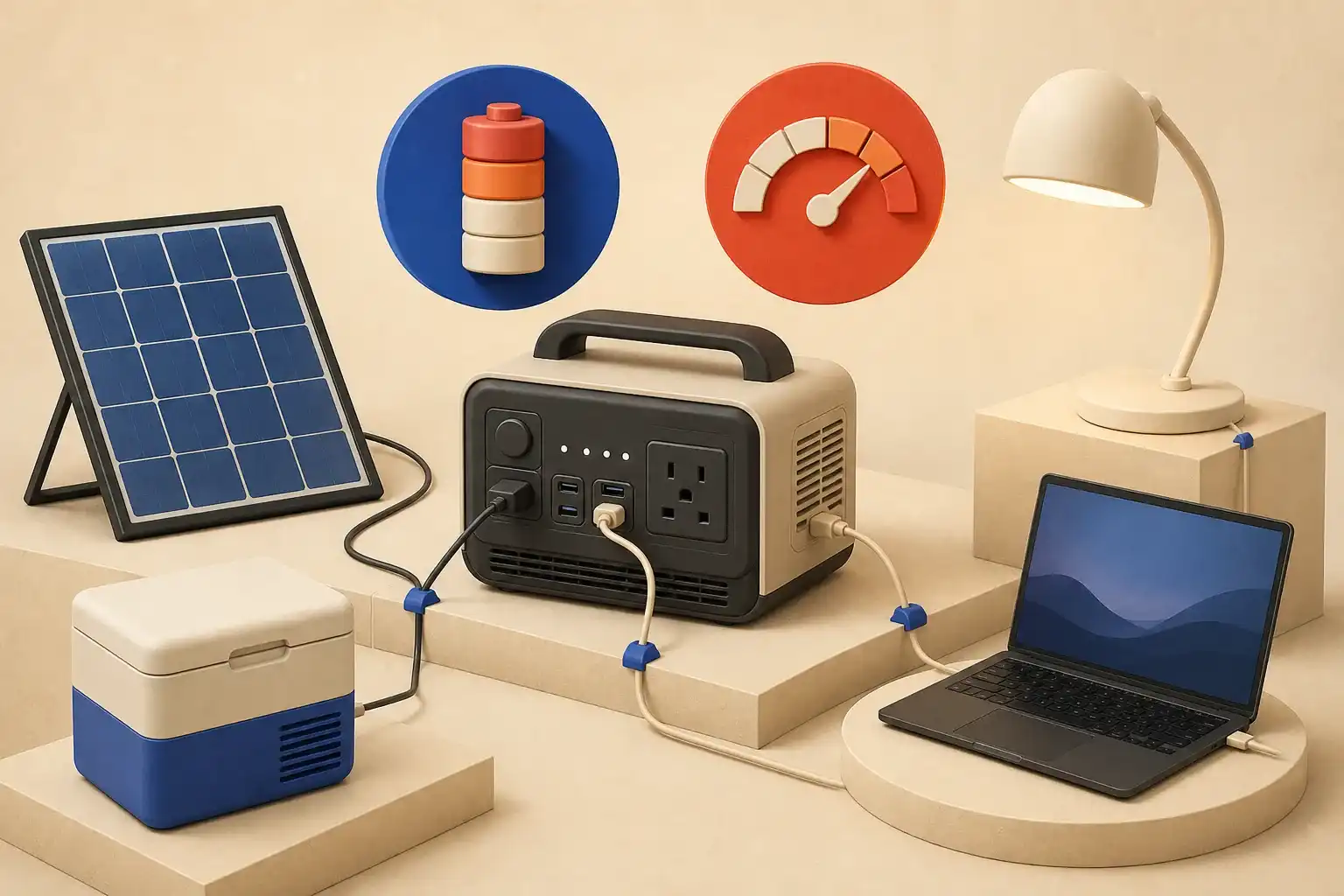
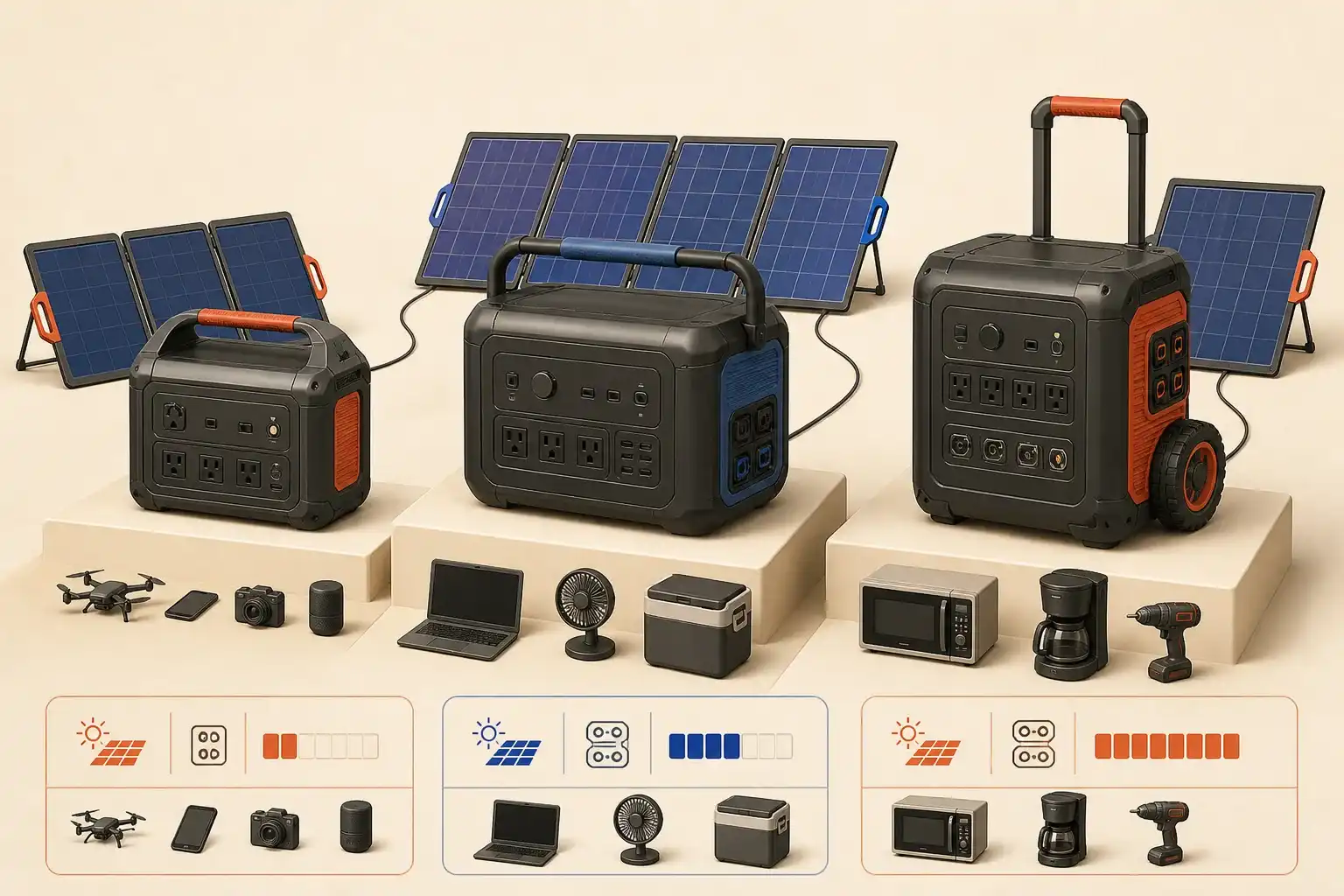
Start with a load list rather than a brand. Write down each device’s normal wattage, possible startup demand, connector, and required hours. A router, laptop, phone, camera battery, LED light, small fan, and compact 12V cooler create very different duty cycles. A heating appliance that draws several hundred watts can be within an inverter rating while exhausting a small battery quickly.
Compact power station specifications
| Decision point | EcoFlow RIVER 2 | Anker SOLIX C300 | BLUETTI Elite 30 V2 |
|---|---|---|---|
| Nominal capacity | 256Wh | 288Wh | 288Wh |
| Rated AC output | 300W | 300W | 600W |
| Manufacturer boost claim | Up to 600W X-Boost | Up to 600W surge | Up to 1,500W Power Lifting |
| Battery chemistry | LFP | LFP | LFP |
| Approximate weight | 7.7 lb | About 9 lb | About 9.5 lb |
| USB-C emphasis | One 60W bidirectional port | Up to 140W two-way USB-C charging | 140W and 100W USB-C outputs |
| Solar ceiling | 110W | 100W | 200W |
| Stated backup transfer | Under 30ms EPS | Under 10ms UPS | 10ms UPS |
These are manufacturer specifications, not measured BestSift results. Boost or lifting modes do not turn a compact inverter into a full-power circuit. They may reduce voltage or support only particular resistive loads. Use the rated continuous AC number for conservative planning and check the manual for excluded equipment.
Capacity: estimate usable time before output
Watt-hours describe stored energy. Watts describe how much power an inverter or port can deliver at a moment. A 288Wh station running a constant 60W load does not automatically last 4.8 hours. Conversion losses, the station’s own electronics, temperature, battery reserve, and cycling behavior reduce usable runtime. A practical planning calculation is nominal watt-hours multiplied by a conservative efficiency allowance, divided by the measured load.
For example, using 80 percent as a rough planning allowance gives about 205Wh from a 256Wh label and 230Wh from a 288Wh label. A measured 50W load would then suggest roughly four to four and a half hours, not a guarantee. Low-power loads can also be affected by idle consumption and automatic shutoff. High-power loads may trigger more fan activity and conversion loss.
Measure important equipment with a plug-in watt meter where appropriate. For USB devices, read the charger label and observe actual charging behavior if you already own a compatible meter. Never use a guessed online wattage for medical, safety-critical, or temperature-sensitive equipment.
EcoFlow RIVER 2: the lightest carry
The RIVER 2 makes the strongest case when the station will be moved frequently. EcoFlow lists 7.7 pounds, a 256Wh LFP battery, 300W rated AC output, and a 60-minute full AC charge under stated conditions. Its 60W USB-C port supports input and output, so a suitable USB-C charger can become an alternate way to refill the station.
That light weight comes with limits. The 300W inverter is designed for electronics and modest appliances. The 110W solar-input ceiling also means panel planning should remain small. Confirm the panel’s open-circuit voltage, current, connector, and cold-weather voltage against the RIVER 2 input range before connection. A panel’s advertised wattage alone does not establish compatibility.
Choose the RIVER 2 for a laptop-and-router kit, camera charging, lights, or a short camping electronics plan. Skip it when the main job is a compressor appliance with uncertain startup demand, a high-watt cooking device, or overnight runtime that already consumes most of 256Wh on paper.
Anker SOLIX C300: USB-C-centered flexibility
The SOLIX C300 pairs a 288Wh LFP battery with 300W continuous AC output and a 600W surge figure. Its main distinction is the charging architecture. Anker specifies up to 140W two-way USB-C charging and a seven-port layout. That can simplify a kit built around USB-C laptops, cameras, phones, and power banks, especially when the buyer wants fewer separate AC adapters.
Port count is not the same as simultaneous full output. Shared power budgets can reduce the output available to individual USB-C ports when several devices are connected. Check the user guide for combined limits, input/output rules, and which cable ratings are required. A 140W port needs an appropriate USB Power Delivery cable and a device that negotiates that profile.
The C300’s stated transfer time is below 10ms, but Anker’s user guide determines supported use. A portable station’s UPS or backup mode is not automatically equivalent to a permanently installed or medical-grade uninterruptible power supply. Test noncritical equipment after setup, keep firmware and app dependencies in mind, and preserve a separate safety plan for essential devices.
BLUETTI Elite 30 V2: more AC headroom
The Elite 30 V2 stores the same nominal 288Wh as the C300 but raises rated AC output to 600W. BLUETTI also lists a 200W solar-input ceiling, two higher-power USB-C outputs, and a 10ms UPS specification. It is the clearest fit when a short-duration AC load exceeds 300W but stays within the manual’s continuous and startup rules.
The important tradeoff is runtime. Doubling inverter headroom does not double stored energy. A 500W load can empty a small battery rapidly even when the inverter accepts it. Power Lifting is not a general surge rating for every electronic device, and reduced-voltage operation may be inappropriate for equipment with motors, compressors, precise controls, or power supplies. Use the standard 600W limit and the appliance manufacturer’s instructions as the planning baseline.
BLUETTI lists 140W and 100W USB-C outputs, a 200W PV input range, app control, and ECO settings. Those features make the Elite 30 V2 flexible, but they also add configuration choices. Check whether low-watt equipment stays awake under ECO mode and whether the AC or DC output automatically turns off after the load drops.
Ports and cable compatibility
Inventory connectors before comparing port counts. A laptop may charge most efficiently from USB-C rather than through an AC brick. A 12V refrigerator may avoid inverter losses through a regulated car-style outlet, but startup current and connector security still matter. Cameras and radio equipment may need specific voltage profiles.
For each station, verify:
- the maximum output of each USB-C port and the combined USB budget;
- whether a USB-C port is input, output, or bidirectional;
- the continuous and peak limit of the 12V outlet;
- solar voltage, current, polarity, and connector requirements;
- whether AC outlets share one total limit;
- whether cables required for the intended charging route are included.
Do not use an adapter merely because the plugs fit. Voltage range and polarity are electrical compatibility requirements, not optional details.
Backup mode is a system decision
All three manufacturers discuss automatic transfer behavior, but the labels differ: EPS or UPS, with stated times from under 30ms to about 10ms. Sensitive electronics can still restart during a transfer, and connected loads must remain within bypass and inverter limits. Some equipment manufacturers prohibit portable battery backup or require a listed UPS topology.
If the target is a router and modem, test the exact pair during a controlled unplug event while no critical work depends on it. If the target is a CPAP, aquarium, medical device, sump alarm, or server, follow the equipment maker’s backup guidance and use redundancy appropriate to the consequence of failure. Marketing runtime examples are not a substitute for that plan.
Charging, temperature, and storage
Fast wall charging is useful before a trip or storm, but maximum charging can increase fan noise and heat. Use a grounded outlet that meets the manual’s requirements, keep ventilation clear, and avoid extension cords unless the manufacturer explicitly permits a properly rated one. Do not cover the station while charging.
LFP chemistry offers long cycle-life positioning, yet storage behavior still matters. Keep the unit dry, avoid a hot vehicle, and follow the maker’s recommended state of charge and maintenance interval. Charging below the permitted temperature can damage lithium cells; the battery-management system is a safeguard, not permission to ignore the range.
For solar, secure the panel against wind, keep connectors out of standing water, and calculate the panel’s cold open-circuit voltage. Real solar input varies with angle, cloud, heat, shading, and controller limits, so divide capacity by expected input only as an optimistic baseline.
Who should choose each model?
Choose the EcoFlow RIVER 2 when every pound matters and the planned loads are primarily electronics below 300W. Its smaller battery and solar ceiling are reasonable when the station is carried often and recharged near a wall outlet.
Choose the Anker SOLIX C300 when the device list is USB-C-heavy and the 300W AC ceiling is adequate. It makes the most sense when two-way USB-C and port arrangement reduce adapter clutter.
Choose the BLUETTI Elite 30 V2 when a verified short-duration load needs more than 300W continuous AC, or when 200W solar input and two strong USB-C outputs materially improve the setup. Do not choose it solely because 600W sounds larger; the 288Wh battery remains compact.
None is a good fit for undefined whole-home backup, long electric heating, or a refrigerator plan that has not been measured for startup and runtime. Move to a larger capacity class when the conservative energy calculation already consumes most of the battery.
Pre-purchase checklist
- List normal watts, startup watts, connector, and required hours for every load.
- Apply a conversion-loss allowance rather than dividing by nominal capacity alone.
- Confirm AC, USB-C, and 12V shared output limits in the current manual.
- Match solar open-circuit voltage, current, polarity, and connector.
- Check operating and charging temperatures for the intended season.
- Decide whether app access or firmware is required for important settings.
- Verify clearance, fan-noise tolerance, cable storage, and carrying method.
- Review warranty service, battery recycling, and shipping restrictions.
- Test backup behavior only with noncritical loads before relying on it.
The best compact station here is the one whose measured load plan fits with margin. RIVER 2 minimizes carry weight, C300 emphasizes USB-C flexibility, and Elite 30 V2 adds AC output headroom. Capacity remains the limiting resource for all three.
Research shortlist
Products to consider
As an Amazon Associate I earn from qualifying purchases.These are research-based examples—not hands-on test results, promises of availability, or absolute rankings.
EcoFlow RIVER 2
The lightest option here for phones, laptops, lights, and short low-load backup where carrying ease matters more than AC output headroom.
EcoFlow RIVER 2 specifications
Anker SOLIX C300
A compact station for buyers who value two-way USB-C charging and a dense port layout while keeping continuous AC loads modest.
BLUETTI Elite 30 V2
The higher-output compact choice for short appliance duty, multiple USB-C devices, and a 10ms UPS mode, with less runtime than its 600W label may suggest.
BLUETTI Elite 30 V2 specifications
Sources reviewed
BestSift favors standards bodies, public agencies, official manuals, and primary manufacturer documentation. Accessed August 13, 2026.