Quick Sift
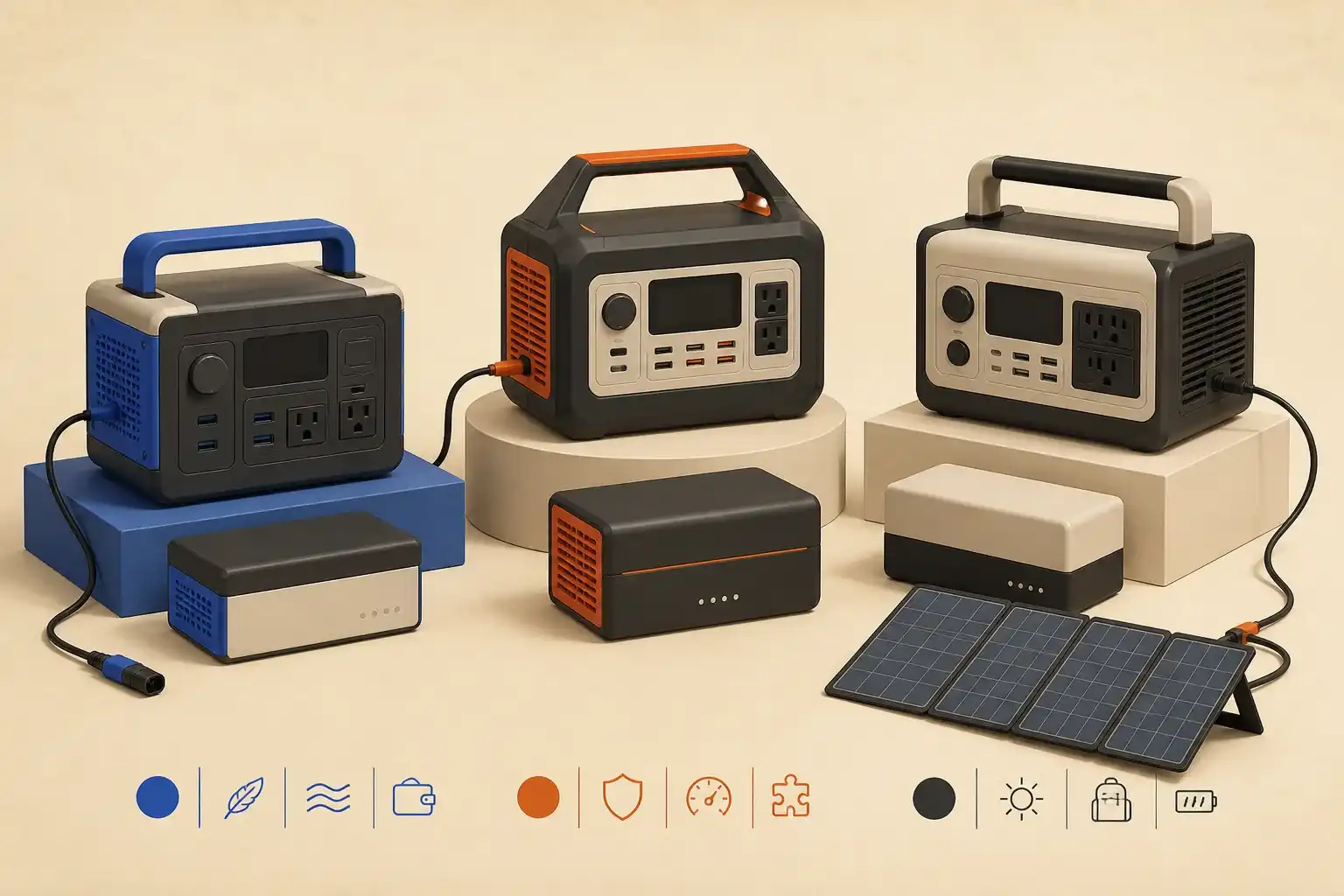
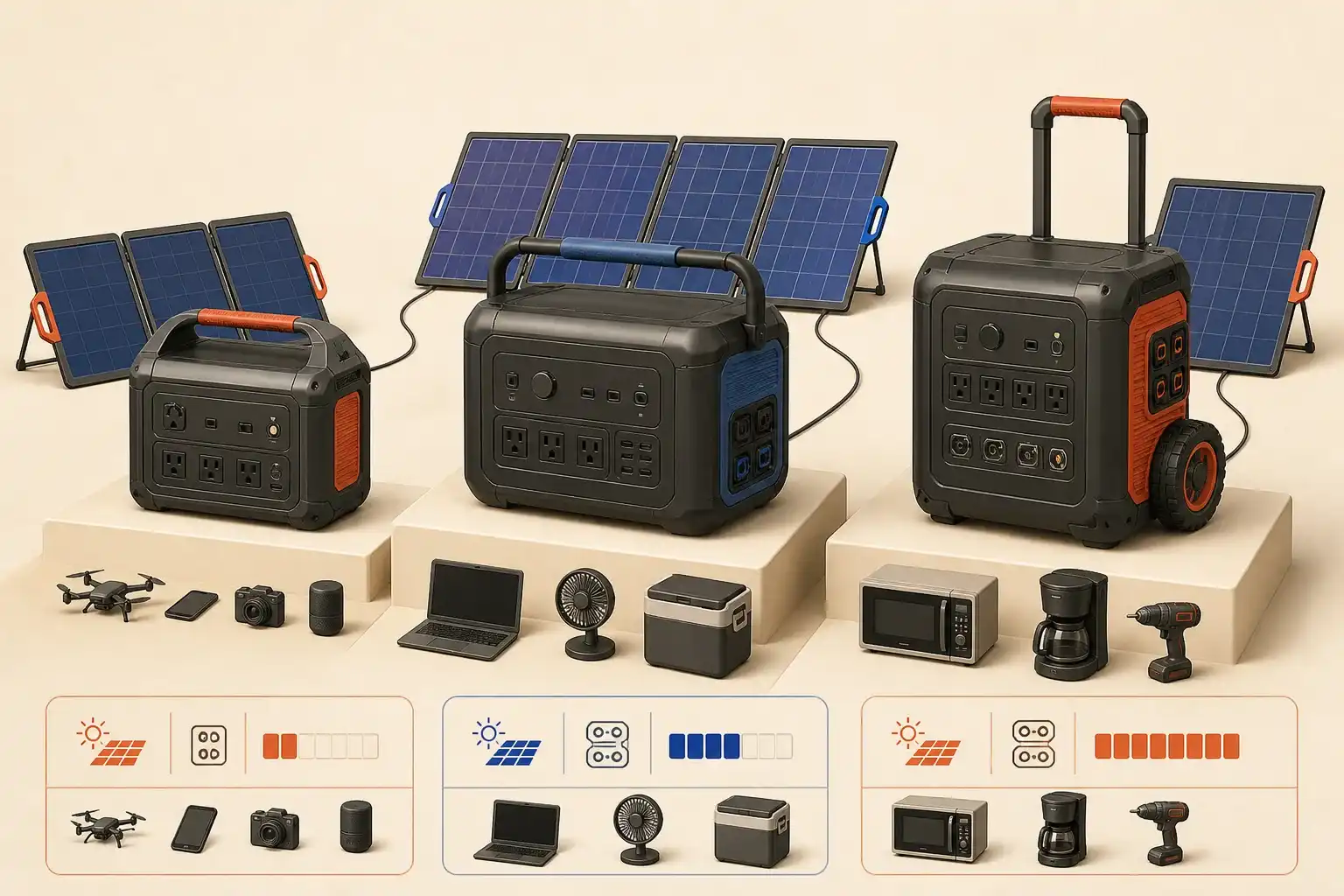
Choose the Anker SOLIX S2000 for the lightest body and moderate long-duration loads, the Jackery Explorer 2000 v2 for 2,200W output in a straightforward package, or the EcoFlow DELTA 3 Max for 2,400W output, broader smart controls, and 10ms transfer.
Options for different needs
These are different-fit reference options, not a ranking. BestSift earns a commission from qualifying purchases through these links. Our selections are research-based, not hands-on test results.
Jackery Explorer 2000 v2
2,042Wh · 2,200W · 39.5 lb
Anker SOLIX S2000
2,010Wh · 1,500W · 35.7 lb
EcoFlow DELTA 3 Max
2,048Wh · 2,400W · 44.8 lb
The Jackery Explorer 2000 v2, Anker SOLIX S2000, and EcoFlow DELTA 3 Max store almost the same nominal energy: 2,042Wh, 2,010Wh, and 2,048Wh. Capacity therefore does little to separate them. The practical decision is how much AC output is required, how often the station must be carried, what charging sources are available, and whether smart backup features justify extra weight and complexity.
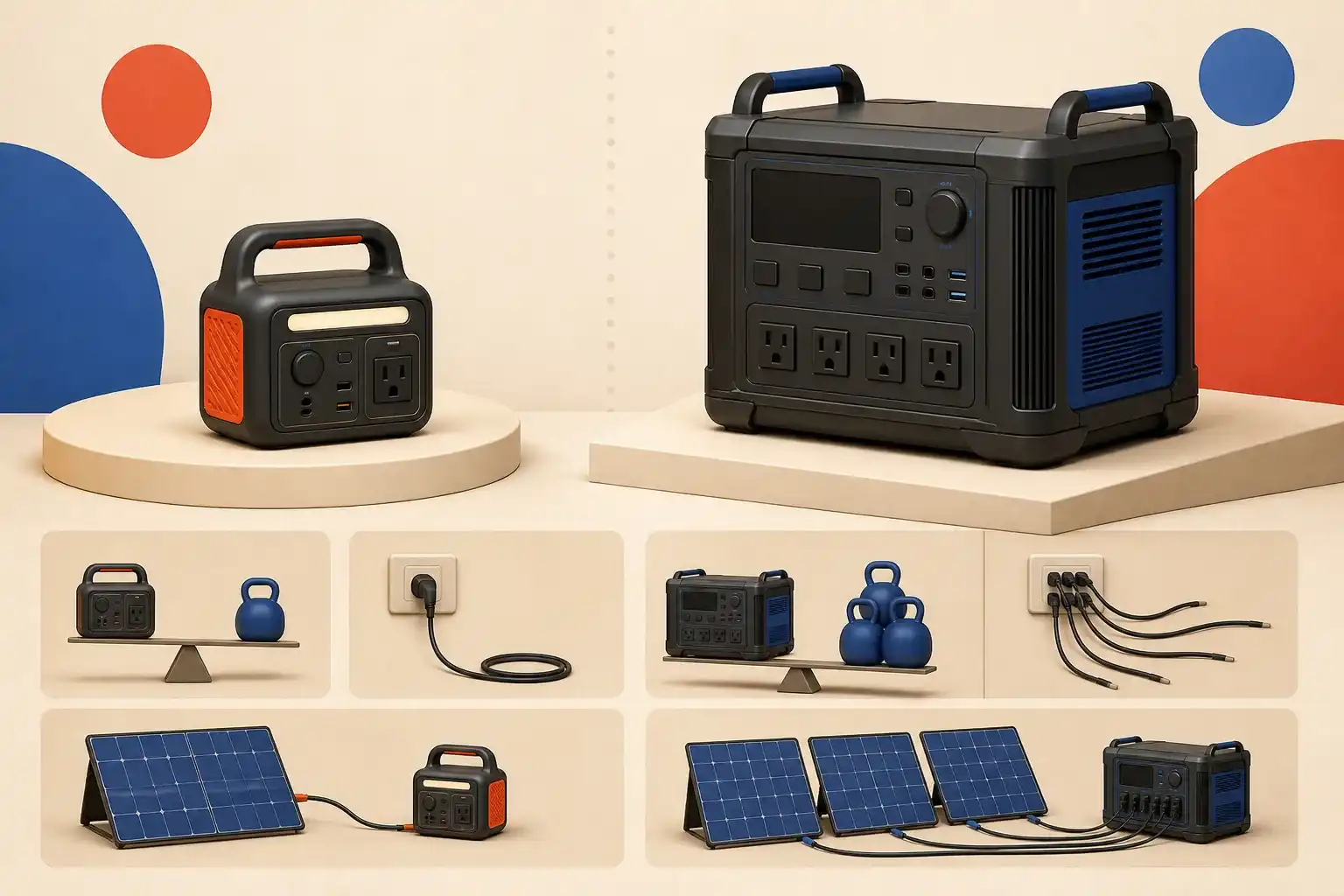
Anker’s S2000 is the lightest and has the lowest rated output. Jackery’s Explorer 2000 v2 balances 2,200W output with a sub-40-pound enclosure. EcoFlow’s DELTA 3 Max raises rated output to 2,400W and adds a 10ms transfer specification and deeper app controls, while weighing more. None should be selected without an appliance audit and safe connection plan.
2kWh portable power station comparison
| Decision point | Jackery Explorer 2000 v2 | Anker SOLIX S2000 | EcoFlow DELTA 3 Max |
|---|---|---|---|
| Nominal capacity | 2,042Wh | 2,010Wh | 2,048Wh |
| Battery chemistry | LFP | LFP | LFP |
| Rated AC output | 2,200W | 1,500W | 2,400W |
| Stated surge | 4,400W | 3,000W | 4,800W |
| Approximate weight | 39.5 lb | 35.7 lb | 44.8 lb |
| Solar input | Up to 400W | Up to 400W | Up to 500W |
| Stated transfer | 20ms UPS | 10ms UPS | 10ms auto-switch |
| Capacity expansion | Fixed base capacity | Fixed base capacity | Base model presented as 2kWh class |
These are manufacturer specifications, not BestSift measurements. Surge numbers describe short-duration behavior under defined conditions. They do not authorize loads above the rated continuous output, and they do not prove every motor or electronic power supply will start.
Build the load plan in watt-hours
A 2kWh label feels substantial, but high-watt appliances can consume it quickly. Estimate each load’s continuous watts, startup watts, duty cycle, and required hours. A refrigerator cycles. A router and modem run continuously. A microwave runs briefly at high power. A well pump may have a difficult startup and require an approved connection system.
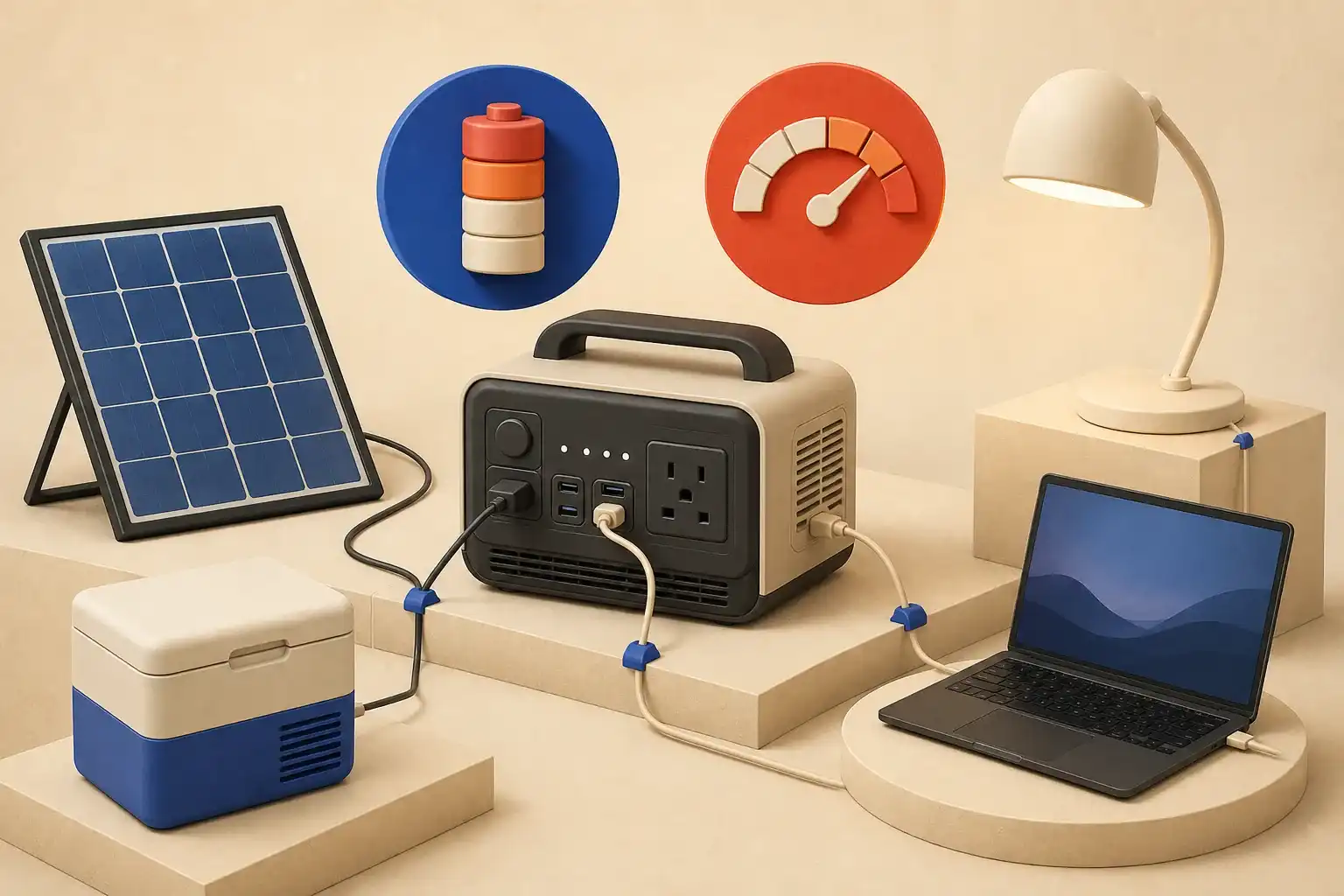
For rough planning, apply an efficiency and reserve allowance. At 80 percent of nominal capacity, these stations offer about 1.6kWh of estimated AC energy. A 100W constant load could approach 16 hours; a 1,500W load could consume the same energy in around an hour. Actual runtime changes with inverter efficiency, temperature, battery reserve, standby consumption, and cycling.
Use a plug-in meter for plug-connected equipment where safe. Record total energy over a representative period, not only the momentary number. For refrigerators and freezers, include warm-weather cycling and keep an independent thermometer. For medical equipment, follow its manufacturer and maintain a separate approved backup path.
Anker SOLIX S2000: lower weight, lower output
The SOLIX S2000 stores 2,010Wh and is rated for 1,500W continuous AC output with a 3,000W peak figure. Anker lists it at 35.7 pounds, making it the easiest of these three to move. Its compact body suits a defined refrigerator, communications, lighting, entertainment, or camping plan where sustained demand remains below 1,500W with startup margin.
That lower inverter limit is not necessarily a weakness. If the priority load averages 100W, a 2,010Wh battery can provide long coverage without paying in weight for a larger inverter. The S2000 becomes less suitable when the plan includes several kitchen appliances, power tools, or simultaneous loads that can cross 1,500W.
Anker specifies 400W solar input and 10ms UPS transfer. Confirm panel voltage, current, connector, and cold open-circuit voltage in the current guide. A 400W solar ceiling means a complete recharge from solar takes far longer than a simple 2,010 divided by 400 calculation once real conditions and charge taper are included.
Choose the S2000 when one-person carrying and long moderate loads are more important than running high-watt appliances together. Do not choose it solely for a refrigerator runtime marketing example; measure the actual refrigerator and ambient conditions.
Jackery Explorer 2000 v2: straightforward output balance
The Explorer 2000 v2 combines 2,042Wh with 2,200W rated AC output and 4,400W surge. Jackery lists a weight of about 39.5 pounds, placing it between the Anker and EcoFlow. It supports up to 400W solar input and includes high-power USB-C output for modern electronics.
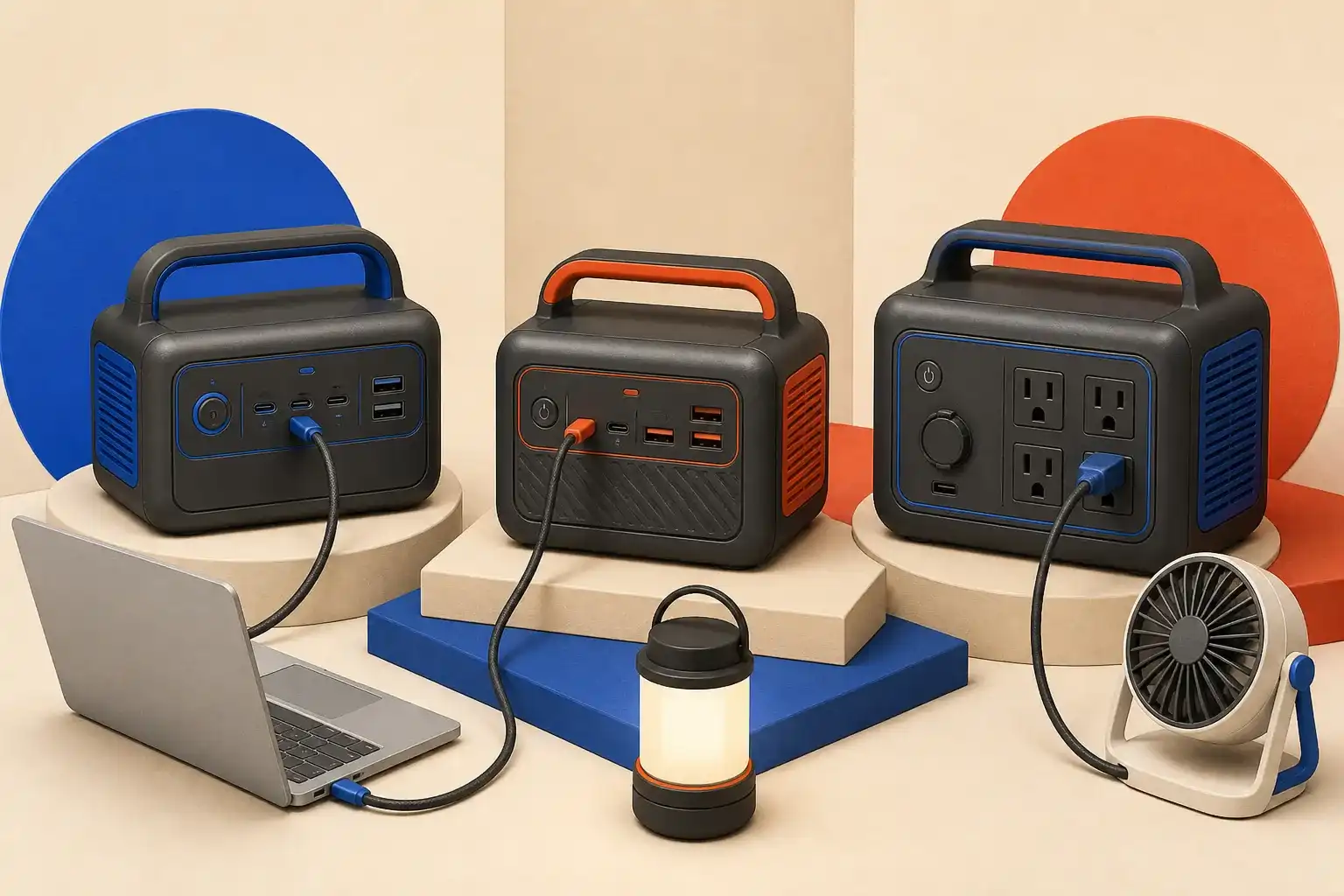
Its 2,200W inverter is enough for a wider appliance list than the S2000. A refrigerator can share the station with lights and electronics while retaining more output margin. Brief kitchen or tool loads may fit, but total watts and startup still need measurement. Plugging several devices into separate outlets does not create separate inverter budgets.
Jackery states a 20ms UPS mode for the Explorer 2000 v2. That can be useful for a router or desktop, but the connected device must tolerate the transfer. Test noncritical equipment, check bypass limits, and do not infer medical-grade performance.
The Explorer 2000 v2 is a good fit for buyers who want a relatively direct 2kWh package without building a larger expansion ecosystem. The fixed capacity is simpler but less adaptable if the load audit later shows 2kWh is insufficient. Its 400W solar ceiling also favors wall or generator-assisted recharging over a large solar-only daily cycle.
EcoFlow DELTA 3 Max: output and control
The DELTA 3 Max has 2,048Wh, 2,400W rated AC output, and a 4,800W surge figure. EcoFlow lists a 10ms auto-switch, 500W solar input, app scheduling, Storm Guard features, and quiet-operation claims under specified low-load conditions. At roughly 44.8 pounds, it is the heaviest station in this comparison.
The extra 200W over Jackery and 900W over Anker can matter when several appliances overlap. It does not add meaningful battery capacity. A larger simultaneous load drains the same 2kWh class faster, so prioritize the devices that must remain on instead of treating 2,400W as a target.
The app can manage charging and backup behavior, but software is an ownership dependency. Check which functions require Wi-Fi, an account, location permissions, or current firmware. Critical operation should remain understandable from the physical controls and display.
EcoFlow’s 500W solar ceiling is only modestly higher than the other two. Match the array to the published voltage and current window, not just 500 nameplate watts. Choose DELTA 3 Max when higher AC headroom, 10ms transfer, and automation solve defined problems enough to justify the added carry weight.
Output headroom and startup watts
Continuous ratings show the total steady AC load. Surge ratings cover brief events under manufacturer conditions. Compressor motors, pumps, refrigerators, and some power tools can demand several times their running watts at startup. Electronic appliances may refuse reduced-voltage boost modes even if their nameplate wattage seems compatible.
Add the loads that can overlap, then preserve margin. A 1,200W microwave running while a refrigerator compressor starts can exceed the S2000’s comfortable range even though each works separately. The same event may fit the Jackery or EcoFlow, but it still consumes battery rapidly.
Where a device is hardwired, stop. Do not create a male-to-male cord or backfeed an outlet. Use only an approved transfer device and qualified installation consistent with the station, electrical code, grounding, neutral configuration, and appliance instructions.
Solar, wall, and generator charging
Solar recharging is constrained by weather and array deployment. The S2000 and Explorer 2000 v2 accept up to 400W; DELTA 3 Max up to 500W. Under ideal steady input, replacing 2kWh still takes several hours before losses and charge taper. In mixed weather it can take a full day or more.
Record panel open-circuit voltage at the coldest expected temperature, maximum current, wiring configuration, connector, and polarity. Shade can disproportionately reduce series strings. Secure panels against wind, keep the station dry and shaded, and route cables away from doors and traffic.
Fast AC charging can demand a substantial wall circuit. Use the supplied cable and a grounded outlet within the manual’s limits. Avoid sharing that circuit with space heaters or kitchen equipment. Slower charging can reduce noise and circuit stress when time allows.
A fuel generator can recharge a station, but it must remain outdoors at a safe distance from structures, doors, and windows. Battery stations produce no exhaust during use; fuel generators produce lethal carbon monoxide. Follow CPSC guidance and never operate a generator in a garage, basement, shed, or enclosed porch.
UPS behavior and low-load settings
Anker and EcoFlow state 10ms transfer, while Jackery states 20ms. The smaller number does not guarantee compatibility. A power supply’s hold-up time, station bypass behavior, load, and settings all matter. Test routers, desktops, network storage, or entertainment systems with a controlled power interruption before treating the setup as dependable.
Check ECO mode and idle shutoff. A low-power router can fall below an automatic threshold, while an always-on inverter can consume meaningful energy. Firmware updates may change options, so document the chosen settings and retest after major updates.
Use an independent alarm for critical temperature or connectivity. Do not rely solely on a phone app that may lose internet access during the same outage.
Portability and installation space
The difference between 35.7 and 44.8 pounds is noticeable on stairs or during vehicle loading. Inspect handle position and lift clearance. Store the station below shoulder height, on a stable dry surface, with vents open and cables protected from foot traffic.
Measure the full footprint including plugs. A station that fits a shelf without cables may not fit once thick AC and solar connectors extend behind it. Allow access to the main switch and emergency shutdown steps. Keep it away from water, combustible clutter, direct heat, and children’s play areas.
If the station will live in a vehicle, secure it against braking and collision. Do not leave it in extreme heat, and do not charge outside the published temperature range.
Long-term maintenance and cost
All three use LFP chemistry and make long cycle-life claims, but the complete product also contains fans, an inverter, display, wireless electronics, and ports. Review warranty length, service location, replacement cable availability, firmware support, and lithium shipping procedures.
Follow the manual’s storage state-of-charge and recharge interval. Inspect vents and cables, exercise the unit with a safe load, and confirm important settings. Learn the local lithium-battery recycling route. Large power stations are not household trash and may require a specialist collection site.
Which 2kWh station fits?
Choose the Anker SOLIX S2000 when 1,500W covers the load plan and lower weight is the strongest constraint. It is well matched to long, moderate loads rather than overlapping high-watt appliances.
Choose the Jackery Explorer 2000 v2 when 2,200W output, 2,042Wh capacity, and a straightforward fixed system create the desired balance. It offers more appliance margin than Anker without becoming the heaviest choice.
Choose the EcoFlow DELTA 3 Max when 2,400W output, 10ms transfer, and smart controls are useful enough to accept a 44.8-pound station. Its automation is an advantage only if it will be configured and maintained.
Buying checklist
- Measure continuous watts, startup watts, duty cycle, and daily watt-hours.
- Apply conversion and reserve loss to nominal capacity.
- Add loads that can overlap and retain output margin.
- Verify solar voltage, current, polarity, connector, and cold-weather voltage.
- Check wall-circuit demand, charging noise, and cable routing.
- Test noncritical transfer behavior and low-load shutdown settings.
- Measure shelf space including attached plugs and ventilation.
- Confirm weight and a safe lifting or vehicle-securing plan.
- Review warranty, repair shipping, firmware, and recycling.
- Use approved transfer equipment for any home-circuit connection.
These stations store nearly the same energy. S2000 reduces weight, Explorer 2000 v2 balances output and portability, and DELTA 3 Max raises output and automation. The load plan—not the 2kWh label—should choose among them.
Research shortlist
Products to consider
As an Amazon Associate I earn from qualifying purchases.These are research-based examples—not hands-on test results, promises of availability, or absolute rankings.
Jackery Explorer 2000 v2
A straightforward 2kWh option for buyers who want 2,200W AC output and a relatively carryable enclosure without planning an expansion ecosystem.
Jackery Explorer 2000 v2 specifications
Anker SOLIX S2000
The lightest choice in this comparison for long-running moderate loads such as refrigeration, with less simultaneous high-watt headroom.
Anker SOLIX S2000 specifications
EcoFlow DELTA 3 Max
The higher-output option for mixed appliances, 10ms backup transfer, and app control, with more weight and a system-oriented feature set.
EcoFlow DELTA 3 Max specifications
Sources reviewed
BestSift favors standards bodies, public agencies, official manuals, and primary manufacturer documentation. Accessed August 13, 2026.