Quick Sift
Inventory essential devices, measure or verify running and startup watts, estimate daily watt-hours with conversion losses, then choose a unit with headroom and a realistic way to recharge. Never run fuel-burning generators indoors, and do not assume a consumer battery station can power medical or life-safety equipment without an approved backup plan.
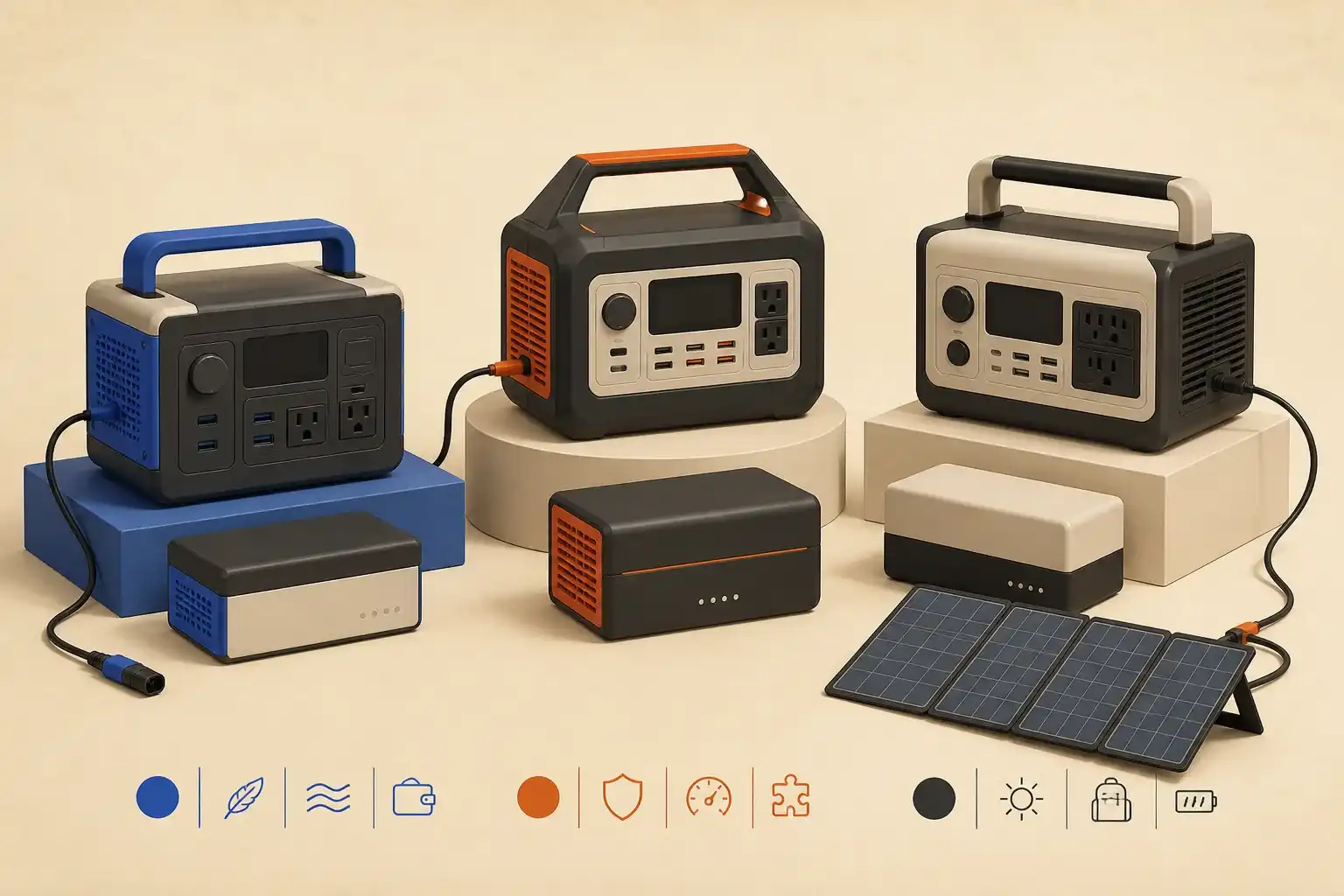
Options for different needs
These are different-fit reference options, not a ranking. BestSift earns a commission from qualifying purchases through these links. Our selections are research-based, not hands-on test results.
EcoFlow DELTA 2 portable power station
Higher AC output · broader appliance range
Jackery Explorer 1000 v2
1,500W output · USB-C planning
A portable power station combines a rechargeable battery, charging electronics, ports, and usually an AC inverter in one case. It can keep phones, lights, a router, a laptop, or selected appliances running during an outage or away from an outlet. It is not a small generator in every sense: it stores energy rather than creating it, and its finite capacity and output limits are easy to overestimate.
The most useful buying process starts with a load plan. Decide what must run, for how long, and how the battery will be replenished. That avoids paying for a large unit that is unpleasant to move or discovering that a compact unit cannot start the one appliance you considered essential.
Separate energy from power
Battery capacity is usually advertised in watt-hours (Wh). A 500 Wh battery theoretically stores enough energy for a 50-watt load for ten hours. Actual runtime is shorter because the inverter, wiring, battery management system, and device power supply all consume energy. Manufacturers may specify usable capacity or tested runtimes, but test conditions differ.
Output is measured in watts (W). Continuous output describes what the inverter can sustain; surge or peak output describes a brief higher load. A refrigerator, pump, compressor, or power tool can draw much more when starting than while running. If that startup demand exceeds the inverter’s capability, a station with ample watt-hours may still shut down.
Make a table for your essentials. Record each device’s rated or measured running watts, plausible startup watts, and daily hours. Multiply running watts by hours for daily watt-hours, then add headroom for conversion loss, cold weather, battery aging, and unplanned use. Do not use a marketing runtime from a different appliance as a substitute for your own load.
A plug-in power meter can help measure steady household loads, but it must be rated and used correctly. Nameplate values may represent maximum rather than typical demand, while cycling appliances alternate between active and idle periods. For critical equipment, obtain requirements from its manufacturer.
Match outlets to the devices
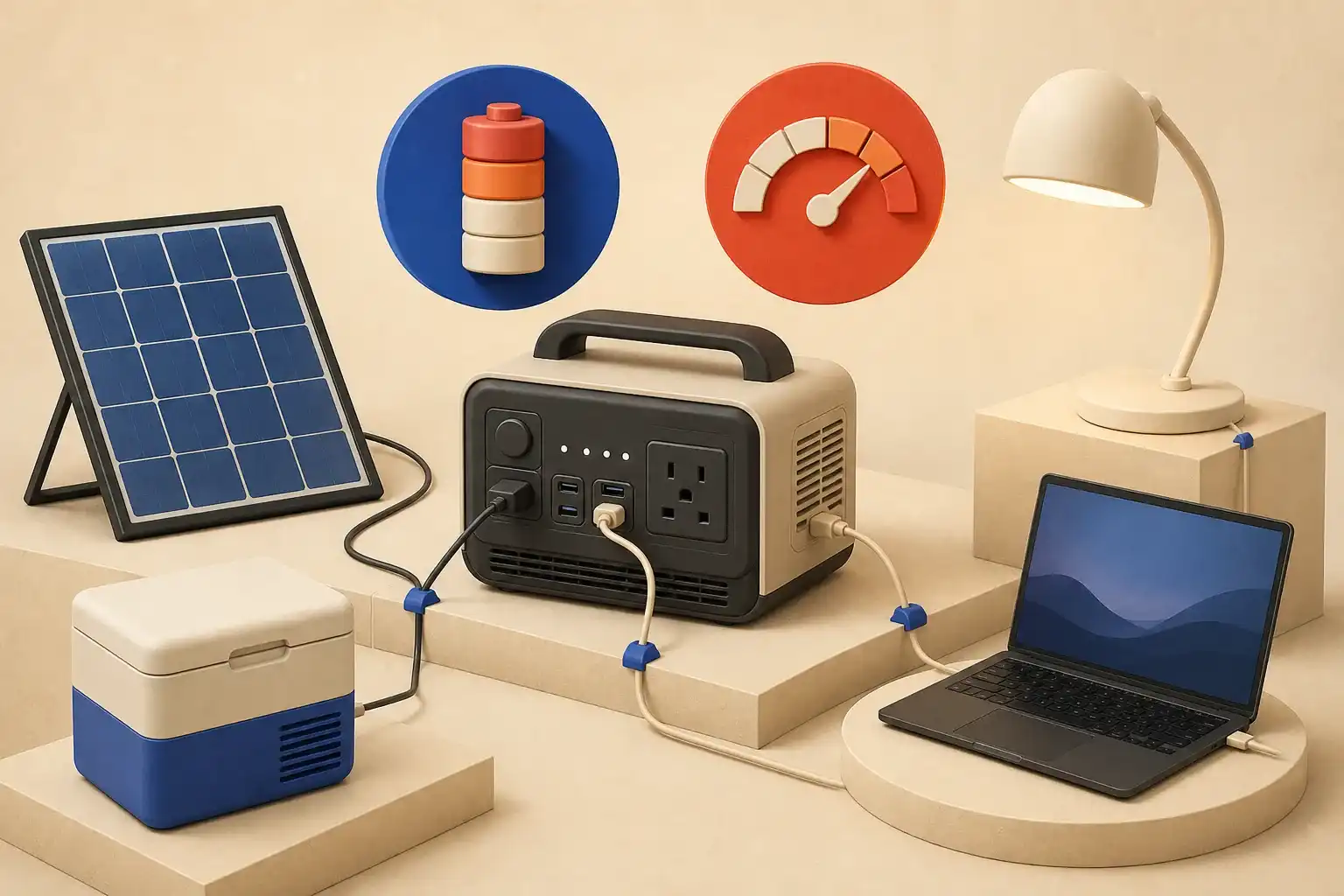
AC receptacles are convenient because existing chargers plug in, but converting battery DC to household AC loses energy. USB-C Power Delivery can run compatible laptops and phones more efficiently, provided the port supports the required voltage and wattage. A USB-C connector shape alone does not guarantee a particular charging profile.
Regulated 12-volt outputs can serve coolers, radios, and automotive accessories. Check current limits and connector fit. Some outputs switch off automatically at low loads; that can interrupt a small medical accessory, network device, or monitoring tool. Read the operating manual for low-power behavior and idle timeout.
Count usable ports, not decorative ones. Closely spaced AC outlets may block each other with large adapters. Shared USB banks can reduce power when several devices connect. Simultaneous charging and discharging—sometimes called pass-through use—may be limited, may increase heat, and does not necessarily provide uninterruptible switchover.
If continuity matters, verify a specified transfer time and supported mode. A general power station should not be assumed to be a UPS. Desktop computers, network equipment, and sensitive controls can reset during an interruption that appears brief to a person.
Battery chemistry changes the tradeoff
Lithium iron phosphate (often written LFP or LiFePO4) has become common in portable stations because it can offer long cycle life and good thermal stability, usually with more weight for a given energy density than some nickel-manganese-cobalt lithium-ion designs. Chemistry labels do not remove the need for competent battery management, cell quality, enclosure design, and certification.
Cycle-life claims usually specify a remaining capacity percentage after a number of cycles under stated conditions. They are not a promise that every unit will be maintenance-free for that many days. High temperature, deep discharge, high charging rate, and long storage at extreme state of charge can affect aging.
Check what recognized safety testing or certification is claimed for the complete product and charger, not just individual cells. Investigate recalls through the U.S. Consumer Product Safety Commission. Stop using a unit that swells, cracks, smells unusual, becomes abnormally hot, leaks, or has damaged connectors, and follow manufacturer and local hazardous-waste guidance rather than placing lithium batteries in household trash.
Build the charging plan before the outage
Wall charging is usually fastest and most predictable. Compare input watts and a full-charge curve, not only an optimistic “to 80%” time. Fast charging can create fan noise and may require a circuit that is not already heavily loaded.
Vehicle charging is useful in transit but often slow. Avoid draining a starter battery, and do not idle a vehicle in an enclosed area. Higher-power alternator solutions require properly rated wiring, fusing, and installation.
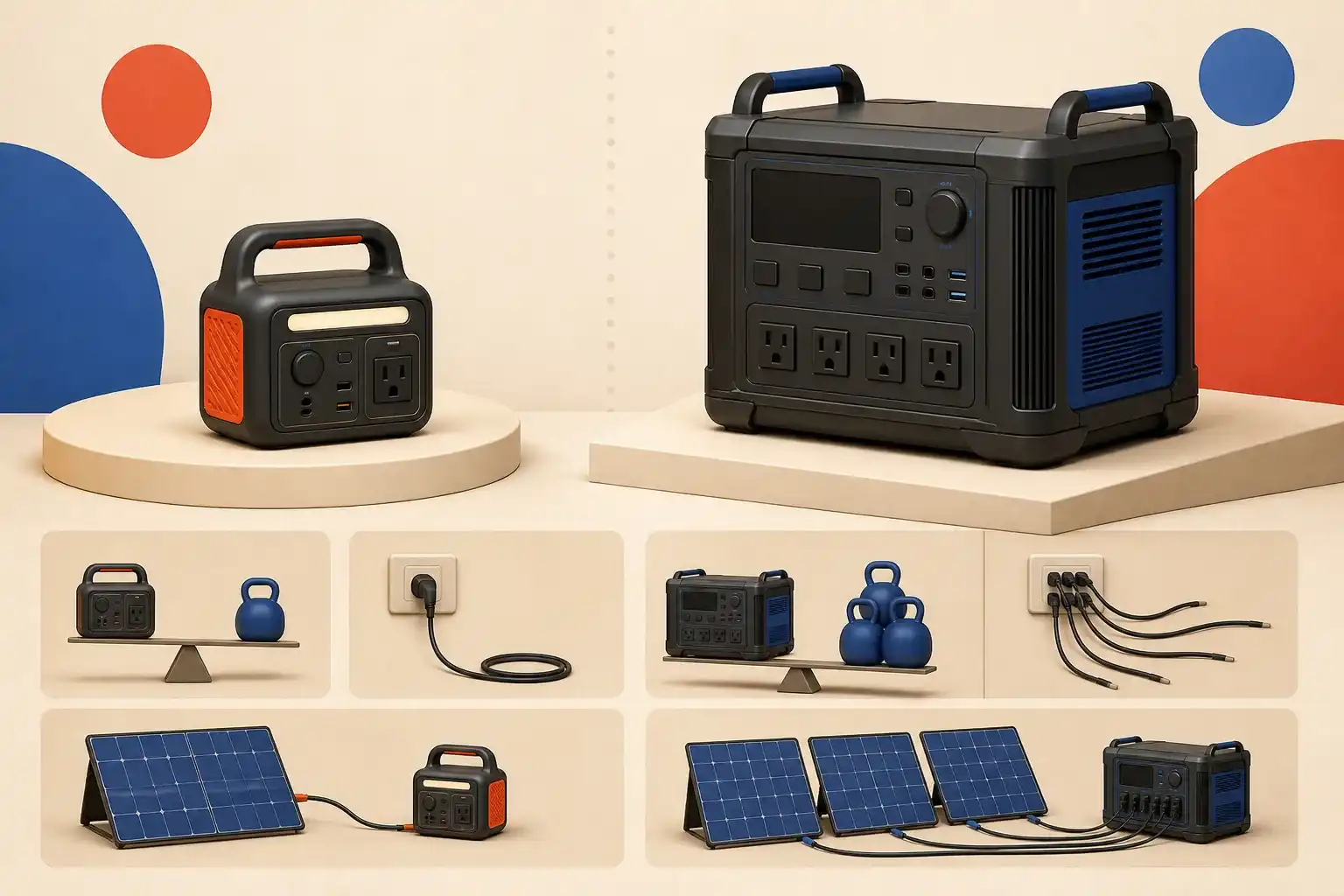
Solar input depends on panel rating, sunlight angle, shade, temperature, season, controller voltage range, current limit, and connector compatibility. A panel’s laboratory watt rating is not its all-day field output. Confirm the station’s allowed open-circuit voltage before connecting panels; exceeding it can damage equipment. Plan several weather scenarios and include the energy used while the station itself is operating.
Portable solar panels need space and theft/weather management. Integrated controllers simplify setup but can lock you into particular connectors. Standard electrical specifications and replaceable cables improve long-term flexibility.
Safety boundaries are part of the purchase
A battery power station does not produce combustion exhaust during operation, which is a major distinction from gasoline, propane, or other fuel-burning generators. Fuel-burning generators can cause fatal carbon-monoxide poisoning and must never be used inside homes, garages, basements, sheds, or near openings. Follow CPSC placement guidance for those products.
The power station itself still requires ventilation and dry, temperature-appropriate placement. Do not cover cooling vents, leave it in standing water, operate it outside its manual’s environmental range, or run damaged extension cords. Keep high-current connections secure and away from children and trip paths.
Never backfeed a home electrical system through a wall receptacle. Supplying household circuits requires suitable transfer equipment and qualified installation under applicable codes. A power station marketed for home integration should be installed exactly as directed.
Medical devices and refrigerated medicine need a formally reviewed backup plan. Confirm power quality, runtime, alarms, transfer behavior, and contingency arrangements with the equipment provider and medical professional. A consumer guide cannot certify a station for life-support use.
Air travel is another hard boundary. Large power stations generally exceed passenger lithium-battery limits. FAA PackSafe rules place spare lithium batteries and power banks in carry-on baggage and apply watt-hour restrictions and airline approval thresholds. Check the exact battery rating and current airline/FAA rules; do not assume “portable” means permitted on an aircraft.
Noise, weight, and storage
Battery stations are quiet compared with engines, but inverters and charging systems use fans. Fan cycling can be disruptive beside a bed or recording setup. Compare noise under a realistic AC load and during fast charging.
Large wheels and handles help only on compatible terrain. Lift the unit at its actual weight and consider stairs, vehicle loading, and who can move it during an emergency. Two smaller units can be easier to distribute but may cost more and cannot always combine output.
For storage, follow the manual’s state-of-charge and inspection schedule. A station stored empty may not be ready; one ignored for years may self-discharge. Update firmware carefully if network-connected features are present, and preserve a manual method to operate essential outputs.
Buying checklist
- List essential loads with running watts, startup watts, and daily hours.
- Estimate watt-hours with conversion, weather, and aging headroom.
- Confirm continuous and surge output against the hardest load.
- Prefer direct DC or USB-C output where it meets the device specification.
- Verify recharge time from wall, vehicle, and realistically sized solar input.
- Check complete-product safety claims and CPSC recall history.
- Review temperature, water, ventilation, and storage limits.
- Confirm replacement battery, repair, warranty, and recycling options.
- Do not treat ordinary pass-through charging as a guaranteed UPS.
- Build a separate approved plan for medical equipment and home-circuit connection.
The best capacity is not the largest number you can afford. It is enough energy and output for a defined priority list, paired with a charging route and safety plan that still work when the normal outlet does not.
Research shortlist
Products to consider
As an Amazon Associate I earn from qualifying purchases.These are research-based examples—not hands-on test results, promises of availability, or absolute rankings.
EcoFlow DELTA 2 portable power station
A 1,024Wh-class example for comparing 1,800W AC output, LFP battery chemistry, recharge inputs, and appliance startup demands.
EcoFlow DELTA 2 specifications
Jackery Explorer 1000 v2
A similarly sized LFP option for shoppers comparing portability, 1,500W output, USB-C needs, and the manufacturer’s charging limits.
Jackery Explorer 1000 v2 specifications
Sources reviewed
BestSift favors standards bodies, public agencies, official manuals, and primary manufacturer documentation. Accessed August 12, 2026.