Quick Sift
Start with the smallest published carry-on limit among the airlines you actually use, including wheels and handles. Then choose two or four wheels for your terrain, soft or hard construction for your packing habits, and a layout you can lift when fully loaded.
Options for different needs
These are different-fit reference options, not a ranking. BestSift earns a commission from qualifying purchases through these links. Our selections are research-based, not hands-on test results.
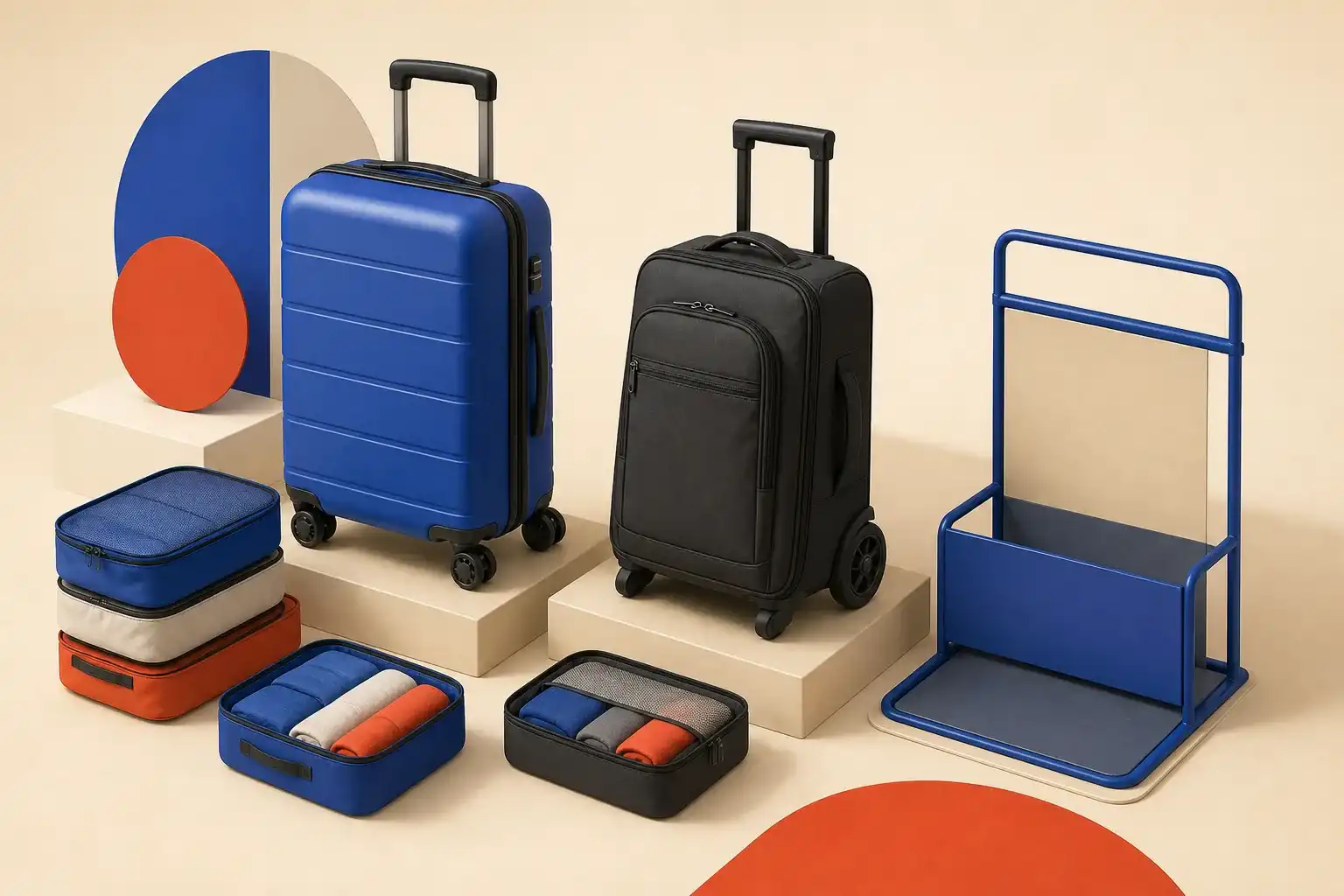
Travelpro Maxlite 5 carry-on spinner
Soft-sided · lightweight flexibility
Samsonite Freeform carry-on spinner
Hard shell · double-wheel design
Carry-on luggage is a compatibility purchase. The case must work with a changing set of airline limits, overhead bins, security procedures, stairs, sidewalks, hotel rooms, and the strength of the person lifting it. A bag that excels on a polished showroom floor can become frustrating at the first curb or crowded boarding gate.
No universal U.S. carry-on size applies to every airline and aircraft. Airlines publish their own baggage limits, and smaller aircraft can require gate-checking even when a bag meets the normal limit. The U.S. Department of Transportation advises travelers to check the carrier’s restrictions. Treat the airline page for your specific itinerary as the current authority rather than assuming a familiar number will always work.
Begin with your route, not the suitcase label
List the carriers you use most and record each published exterior limit and weight limit. Include regional or low-cost carriers if they appear in your plans. Buy to the most restrictive recurring limit, not the most generous one. A fractionally smaller case often creates more options than the extra shirt a larger case might hold.
Measure the complete bag as the airline will see it: wheels, feet, side handle, top handle, and any expanded section. Product dimensions sometimes emphasize the packing compartment, while airline sizing frames judge the complete exterior. An expansion zipper is valuable after a road trip but may turn a compliant cabin bag into a checked bag on the return flight.
Weight rules matter even when your home carrier rarely checks them. A heavy empty case consumes the allowance before packing begins. Also consider liftability: you may need to place the loaded bag overhead without assistance. Pack a candidate to a realistic trip weight and practice lifting it safely from floor to shoulder height.
Two wheels or four?
Two-wheel rollers recess part of the wheel into the case and trail behind the traveler. Their larger wheels often handle cracks, carpet, cobblestones, and curbs better. The recessed design can preserve usable interior depth and protect the wheel assembly. The tradeoff is that the case puts some load on your arm and occupies space behind you.
Four-wheel spinners move upright in any direction. They are easy to guide through queues, narrow aisles, and smooth terminals, and the upright posture can reduce arm load. Their exposed casters take impacts, consume part of the exterior measurement, and may struggle on rough surfaces. A spinner on a slope can also roll away if it has no brake.
Wheel count alone does not determine durability. Look at wheel diameter, mounting structure, axle play, and whether replacement assemblies are available. Roll the loaded case, not an empty display. Listen for rattles, change direction quickly, and see whether the handle twists when one wheel crosses a seam.
Choose two wheels if your regular journey includes sidewalks, transit stairs, older streets, or long outdoor walks. Choose four if most movement is through airports, elevators, offices, and hotels and you value upright maneuvering. A frequent rail traveler may care more about stable standing and handles on multiple sides than a person who goes directly from car to airport.
Hard shell and soft side solve different problems
Hard-shell cases resist external pressure and do not absorb light rain in the same way fabric can. Their clamshell opening divides contents into two halves, which helps organization but requires a wide floor or bed to open. Smooth shells show scratches, and very rigid shells can transfer impacts to hinges, zippers, frames, or contents.
Material labels need context. Polycarbonate can flex under impact; polypropylene can be light and resilient; ABS is often inexpensive but varies in thickness and construction. An aluminum shell can be durable and repairable in particular ways but is heavier, costly, and prone to visible dents. The design, corners, frame, zipper, and warranty matter as much as the polymer name.
Soft-sided luggage typically opens from one face, which works in a tight room. Exterior pockets keep documents and a laptop accessible, and fabric can tolerate a little irregular packing. It offers less crush resistance and can soak through unless treated and protected. Overstuffing transfers stress to seams and zippers, so apparent flexibility is not unlimited capacity.
Think about what you pack. A hard shell can isolate shoes and compression cubes across halves. A soft front-opening case can keep one main stack undisturbed and provide quick-access pockets. Fragile equipment still needs its own padding; neither shell style makes careless packing safe.
The telescoping handle is part of the chassis
A comfortable handle height prevents repeated hunching or heel strikes. Test every locking position while walking in the shoes you travel in. A handle with substantial wobble may become harder to control when the bag is loaded, although a small amount of clearance is normal for sliding tubes.
Internal handle rails create channels inside the case. Flat packing surfaces are easier to arrange, while protruding rails may be acceptable with cubes. The handle’s attachment and serviceability deserve more attention than the number of height stops.
Lift handles on the top and side make overhead bins, car trunks, and luggage racks easier. Check that they sit close enough not to violate size limits and that their mounting points distribute a loaded case. A bottom grip is useful when lifting with two hands.
Capacity is a layout question
Liter figures are not consistently measured across brands. Compare the interior with the same packing list. Deep clamshell halves suit compression cubes; a single deep compartment can handle bulky shoes or a camera insert. Dividers help control contents when the case opens vertically, but elaborate organizers add weight and may dictate a layout that does not fit your trip.
Compression straps should anchor firmly and adjust over both light and full loads. Zippered dividers keep small objects out of hinges and wheels. Light-colored liners make items easier to find, while removable or wipeable liners simplify spills.
Laptop compartments add convenience at security but place electronics near an exterior wall and consume depth. Verify padding, closure, and device dimensions. Never assume a suitcase is an approved way to transport every battery or restricted item; consult TSA, FAA, airline, and destination rules for the actual contents.
Security and gate-check reality
A built-in lock deters casual opening but does not turn a zippered case into a safe. Keep medication, identification, keys, critical documents, and permitted spare batteries in a smaller personal item that stays with you. FAA guidance says spare lithium batteries and power banks belong in carry-on baggage, not checked baggage, and airline staff may require their removal if a carry-on is gate-checked.
Use identification that does not expose unnecessary personal information. Photograph the packed case and retain receipts for high-value contents when appropriate. Distinctive straps or tags can make a common black case easier to recognize, but loose accessories should not snag on conveyors if the bag is checked.
Maintenance and lifetime cost
Wheels and handles are common failure points. A long warranty is more useful when parts, repair locations, and claim procedures are clear. Ask whether wheel modules, handles, and zipper pulls can be replaced and whether damage from airline handling is excluded.
Clean wheel axles and remove hair before it binds. Wipe shells according to material guidance; aggressive solvents can cloud or weaken plastics. Dry fabric completely before storage. Store the case without heavy objects crushing it, and leave zippers unstrained.
Bright colors and fashionable textures may age before the structure does. A restrained case with obtainable parts can remain useful through many trips. Calculate value per journey, not only purchase price.
Buying checklist
- Check the current complete-size and weight rules for your recurring airlines.
- Measure wheels, feet, handles, and the expanded section.
- Pack the case realistically and confirm you can lift it overhead.
- Test loaded wheels on carpet, seams, turns, and a small curb.
- Confirm the handle height and heel clearance.
- Choose an opening style that works in the rooms you use.
- Inspect zipper, corner, hinge, and wheel attachment points.
- Verify repair parts, warranty exclusions, and claim procedures.
- Keep essential items and permitted spare batteries accessible in case of gate-checking.
The right carry-on does not need to maximize every dimension. It needs to pass through the most restrictive part of your normal trip with the least friction—and remain controllable when the terminal floor ends.
Research shortlist
Products to consider
As an Amazon Associate I earn from qualifying purchases.These are research-based examples—not hands-on test results, promises of availability, or absolute rankings.
Travelpro Maxlite 5 carry-on spinner
A soft-sided, lightweight example for travelers who value exterior flexibility and should verify the full wheel-and-handle dimensions with their airline.
Travelpro Maxlite 5 dimensions
Samsonite Freeform carry-on spinner
A polypropylene hard-shell example with double wheels and an integrated lock; its overall dimensions deserve an airline-specific check.
Samsonite Freeform specifications
Sources reviewed
BestSift favors standards bodies, public agencies, official manuals, and primary manufacturer documentation. Accessed August 12, 2026.