Quick Sift
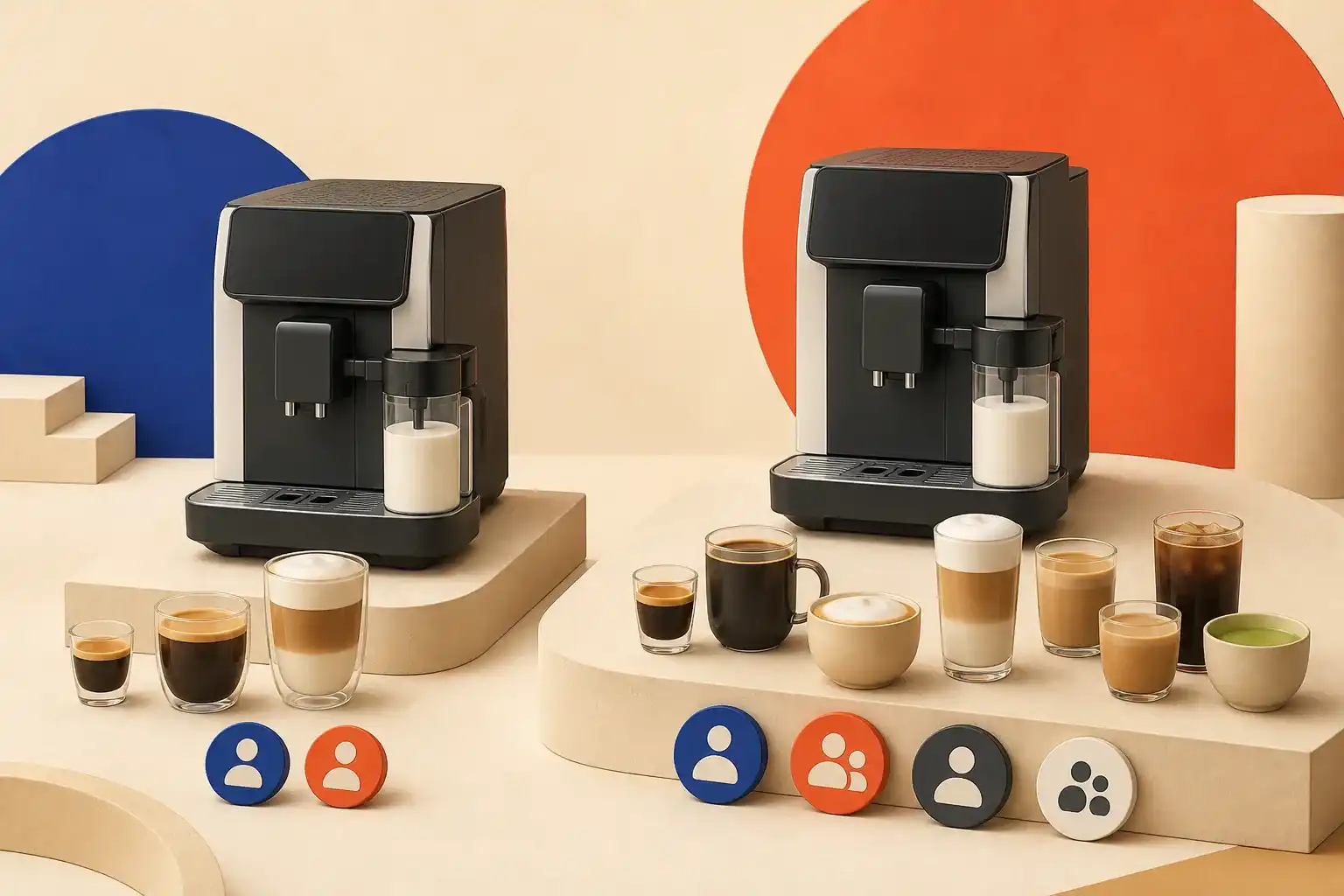
The Philips 4400 EP4444/90 covers a broad 12-drink menu and two saved profiles. Move to the Philips 5500 EP5544/94 when several users will genuinely use four profiles and the expanded 20-drink menu; otherwise the added presets may not change daily coffee.
Options for different needs
These are different-fit reference options, not a ranking. BestSift earns a commission from qualifying purchases through these links. Our selections are research-based, not hands-on test results.
Philips 4400 LatteGo EP4444/90
Twelve drinks · two user profiles
Philips 5500 LatteGo EP5544/94
Twenty drinks · four user profiles
Philips positions the 4400 LatteGo EP4444/90 and 5500 LatteGo EP5544/94 as broad-menu fully automatic espresso machines. They share a compact bean-to-cup architecture, ceramic grinder, removable brew group, AquaClean compatibility, SilentBrew positioning, QuickStart, and the two-part LatteGo milk system. The 5500 differentiates itself mainly through more direct recipes and more user profiles.
That makes this a household-organization decision. If two people repeat a small set of drinks, the Philips 4400 may already remove the meaningful friction. If four users want distinct coffee strength, volume, and milk recipes, the 5500’s additional profile capacity can matter every day.
Philips 4400 vs 5500 overview
| Decision point | Philips 4400 EP4444/90 | Philips 5500 EP5544/94 |
|---|---|---|
| Published presets | 12 hot and iced drinks | 20 hot and iced drinks |
| Saved profiles | Two user profiles | Four user profiles |
| Milk system | LatteGo | LatteGo |
| Grinder | Adjustable ceramic burr grinder | Adjustable ceramic burr grinder |
| Noise/startup | SilentBrew and QuickStart | SilentBrew and QuickStart |
| Strongest fit | One or two users, broad essentials | Several users, widest direct menu |
Preset count is not performance evidence. Both machines rely on similar core preparation steps. A longer menu changes the available sequence of coffee, water, and milk; it does not prove better extraction or automatically suit every bean.
Decide whether 12 drinks are already enough
The Philips 4400 menu includes common straight coffee, Americano-style, milk, and iced options. Twelve direct choices are already more than many households use. Build a list from actual café or home orders rather than imagining future experimentation.
The Philips 5500 expands the menu to 20 presets. Additional drinks can reduce manual adjustment when users alternate among short milk drinks, long coffees, and iced formats. The benefit is strongest when those drinks differ in more than name and several are prepared every week.
Some menu items are combinations or volume variations of the same core ingredients. A shopper who only wants espresso, coffee, and cappuccino should not assume a 20-drink machine produces those three better. Compare the underlying customization controls and workflow.
Profile count is the practical divider
The 4400 provides two saved profiles. That is well matched to a couple with different strength and volume preferences. Guests can use default settings without occupying a permanent profile.
The 5500 provides four profiles. In a family or shared home, this prevents one person’s customization from overwriting another’s. It also gives each regular user a faster route to several saved drinks. The value declines sharply when only one person operates the machine.
Profiles do not store different beans. Everyone shares the hopper contents and grinder calibration. If users prefer regular and decaf, the pre-ground bypass can handle a limited alternative within the manual’s rules, but it is not an independent grinder. Frequent bean switching remains awkward on both models.
Hot and iced drink expectations
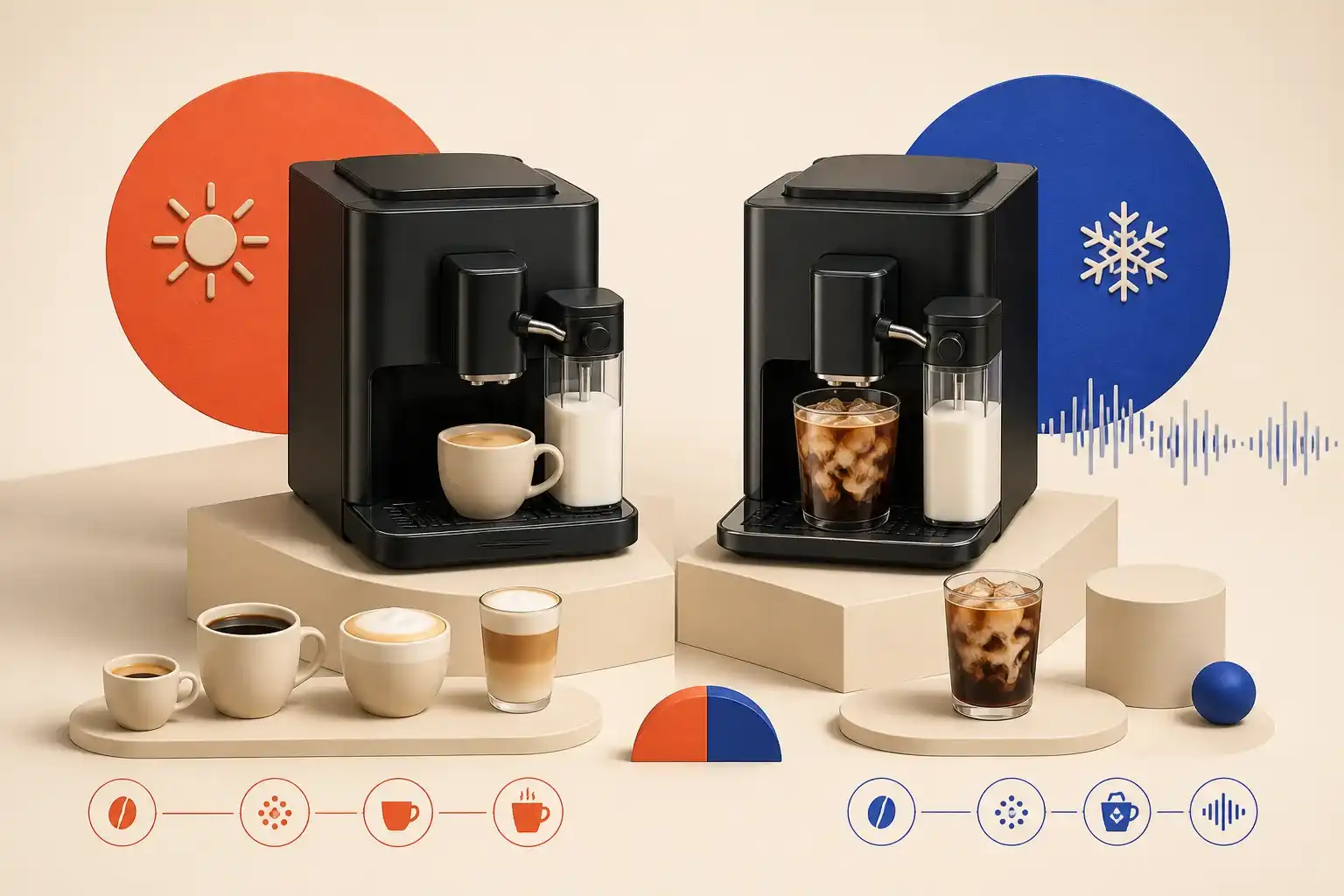
Both machines include iced-coffee programs. These prepare coffee designed to be poured over ice; the machine does not refrigerate water or manufacture ice. Use a heat-tolerant vessel, follow the prescribed ice and volume guidance, and account for dilution.
An iced preset is not slow-steeped cold brew. If cold brew is the main goal, choose a dedicated cold-extraction system or make it separately. Marketing language that groups cold formats can obscure this important difference.
Hot milk drinks depend on milk temperature, formulation, and LatteGo setup. Recipe programming can repeat a sequence, but foam and final cup temperature still vary with ingredients and cup preparation.
LatteGo cleaning remains the same kind of work
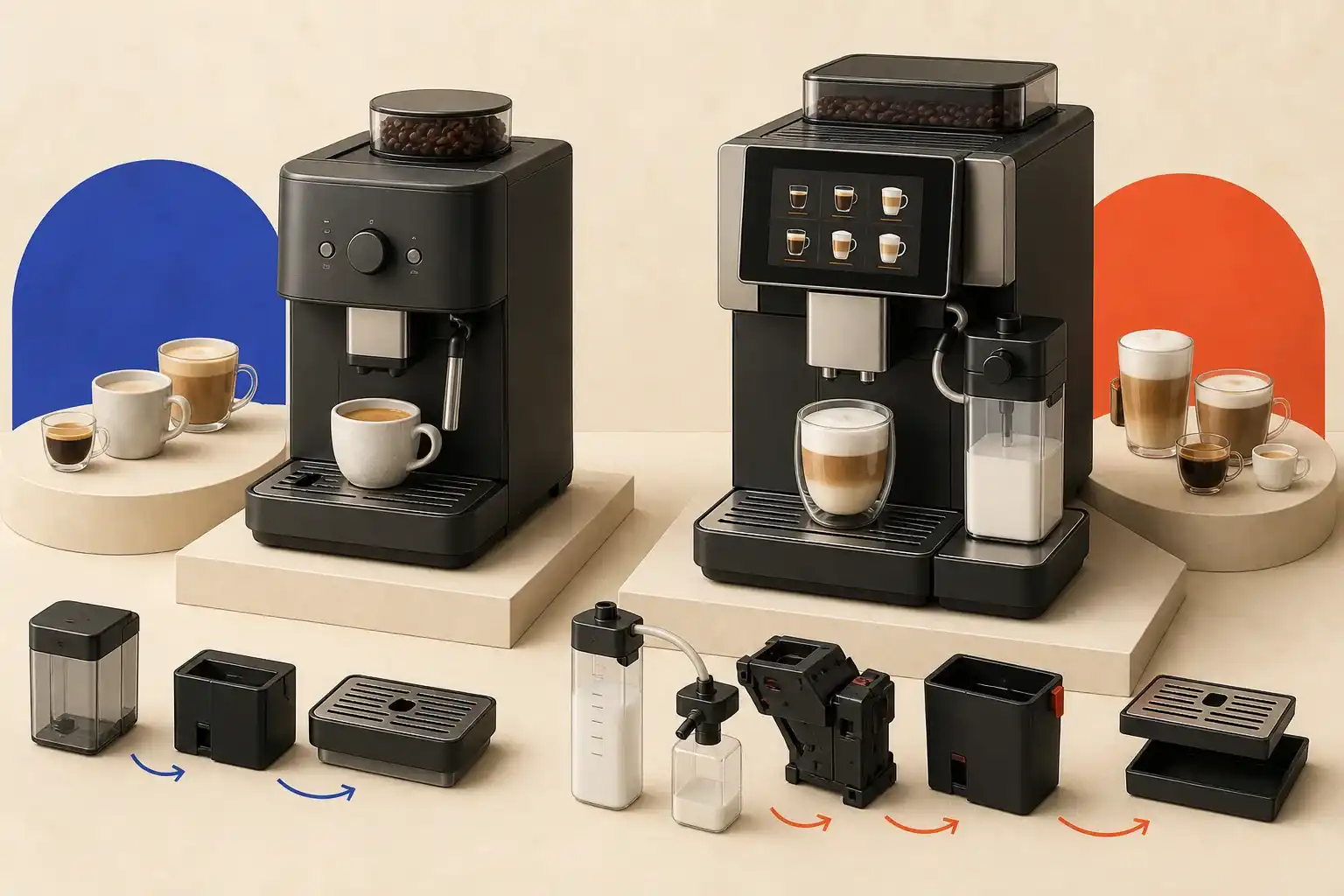
Both models use a two-part LatteGo assembly without a long milk tube. Separate and rinse the components after use and place only manufacturer-approved pieces in a dishwasher. Store milk cold and do not treat the automatic rinse as complete sanitation.
The system’s simplicity is most valuable for frequent milk-drink households. If milk is used once a week, the container may be more appliance than needed. If milk is used throughout the day, decide whether the carafe will return to the refrigerator promptly after each session.
Alternative milk performance depends on its protein and fat formulation. Philips compatibility does not mean every brand produces identical texture. Start with cold liquid and the official quantity guidance.
Grinder settings and recipe customization
Philips uses an adjustable ceramic grinder in both models. Adjust it only according to the manual, typically while grinding and one step at a time. Brew several cups after a change before deciding whether to move again.
Strength, volume, and grinder setting affect different parts of the process. Strength controls the dose or aroma setting; volume controls water and milk quantities; grind changes resistance and extraction behavior. Change one variable at a time so you know what improved or worsened the cup.
Do not fill the hopper with wet, caramelized, or flavored beans unless explicitly approved. Cleaners, water, and ground coffee do not belong in the whole-bean hopper. Use the bypass chute only for the specified scoop and cycle.
Brew-group ownership
The removable brew group must be rinsed and lubricated on Philips’ schedule. Turn off the machine as instructed so the group parks in the correct position. Force is a warning sign; do not pull or reinstall it against resistance.
Empty the grounds container, wash the drip tray, clear coffee residue, and run coffee-oil cleaning when prompted. The internal rinse sends clean water into the tray, so tray volume does not equal spilled drinks.
Descaling addresses mineral buildup in the water circuit. Coffee-oil tablets address residue in the coffee path. LatteGo cleaning addresses milk. These are separate jobs, and performing one does not complete the others.
AquaClean conditions
Philips advertises extended intervals between descaling when AquaClean filters are installed, activated, and replaced in sequence. Treat the maximum cup claim as conditional. Water hardness, filter history, and machine prompts govern the actual schedule.
Test water during setup. If the filter is not activated in the menu, the machine cannot correctly track it. Do not reset a scale warning by changing a filter without following the prescribed descaling logic.
Budget for filters based on actual replacement frequency and drink volume. A household making many drinks may move through the filter cycle much faster than an occasional user.
Noise, startup, and shared spaces
Both models carry SilentBrew and QuickStart features, so neither has a clear specification advantage here. Grinding will remain the loudest short event in many kitchens. Automatic rinsing, pump operation, and brew-group movement are also audible.
Place the machine on a level, solid surface. A hollow cabinet or loose tray can amplify vibration. Do not block ventilation with sound-damping material. If early-morning noise is critical, seek comparable measured data or hear the exact model before purchase.
QuickStart reduces one part of the wait but does not shorten grinder, milk, and cleanup time. Evaluate the complete first-drink routine.
Physical and support checks
Both machines have narrow fronts and deep bodies. Add top clearance for beans, front clearance for the water tank and tray, side clearance for the brew group, and room for the LatteGo container. Measure the tallest cup used at home.
Confirm EP4444/90 or EP5544/94 and 120-volt U.S. compatibility. Philips sells related suffixes in other regions with different plugs, menus, or documentation. Amazon titles are not a substitute for the model label.
Check the official support page, warranty terms, filter availability, LatteGo replacement parts, and brew-group service route. A current consumables supply can be more important than eight extra presets over the life of the machine.
Who should choose the 4400?
The Philips 4400 fits one or two regular users who want a broad hot-and-iced menu and simple milk cleanup. It is the rational stopping point when two profiles cover everyone and the household can name only a handful of desired recipes.
Who should choose the 5500?
The Philips 5500 fits three or four regular users with genuinely different saved drinks, or a household that will rotate through the larger 20-preset menu. It is difficult to justify solely as a higher series number when the extra profiles and recipes will remain unused.
Buying checklist
- Confirm EP4444/90 or EP5544/94 and U.S. electrical specifications.
- Map weekly drinks to the 12- and 20-preset menus.
- Count regular users who need saved preferences.
- Decide how decaf will be handled with one hopper.
- Measure bean, water, tray, brew-group, LatteGo, and mug clearance.
- Review milk, brew-group, oil-cleaning, filter, and descaling schedules separately.
- Check current filters, carafe pieces, replacement parts, and warranty support.
- Treat iced coffee as hot-brewed coffee over ice, not automatic cold brew.
The Philips 5500 earns its extra complexity when a larger household uses it. For one or two users, the 4400 already offers the central LatteGo experience and a broad drink set without paying in interface complexity for unused presets.
Research shortlist
Products to consider
As an Amazon Associate I earn from qualifying purchases.These are research-based examples—not hands-on test results, promises of availability, or absolute rankings.
Philips 4400 LatteGo EP4444/90
A mid-range LatteGo choice for households that want hot and iced recipes plus saved preferences without the widest menu.
Philips 5500 LatteGo EP5544/94
The broader-menu LatteGo alternative for several users who will benefit from more saved profiles and drink presets.
Philips 5500 official specifications
Sources reviewed
BestSift favors standards bodies, public agencies, official manuals, and primary manufacturer documentation. Accessed August 13, 2026.