Quick Sift
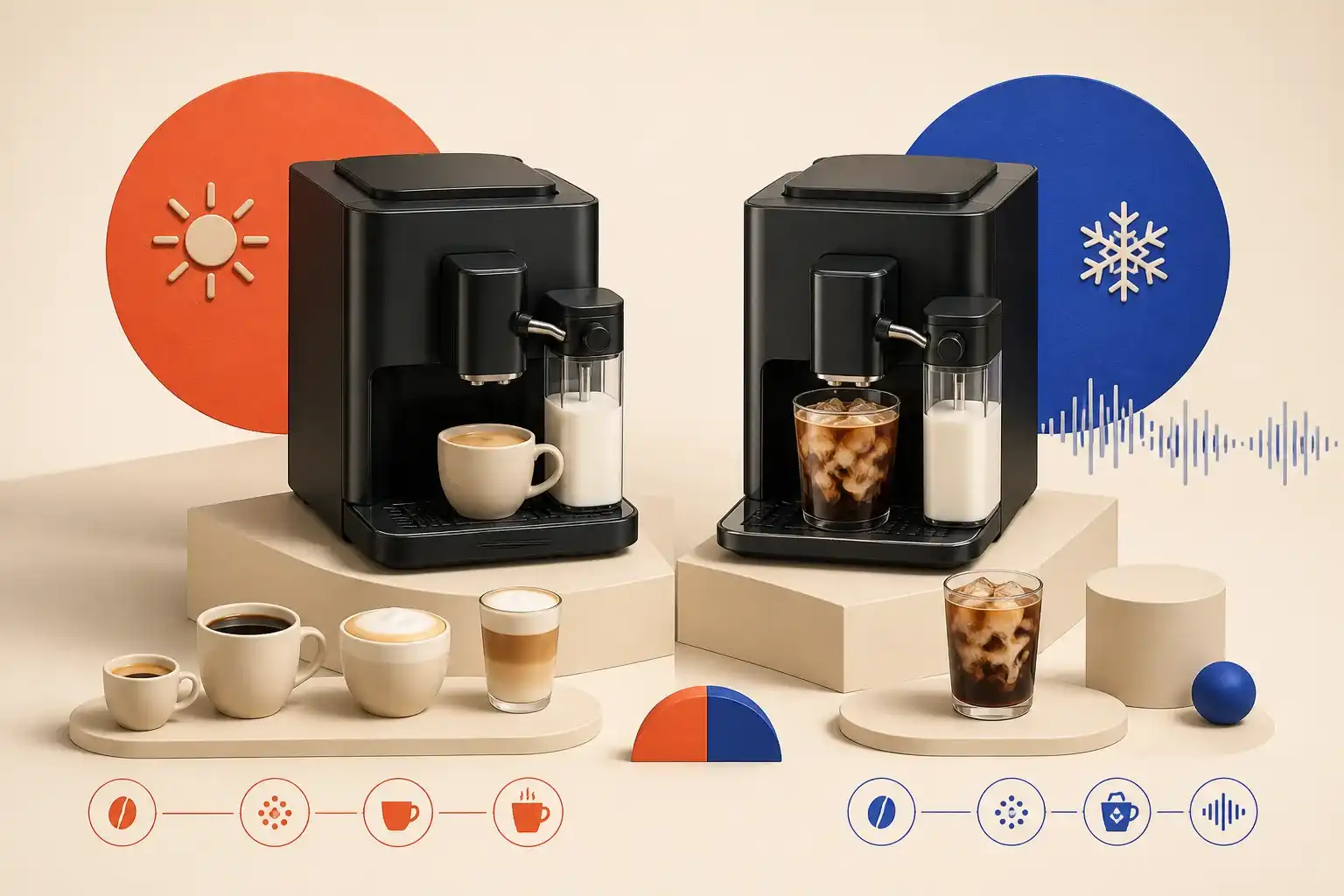
Choose the Philips 3200 EP3241/54 when its five core drinks cover your routine and official support for the exact listing remains clear. Choose the Philips 3300 EP3341/50 when an iced-coffee preset, quieter operation, and faster ready state matter enough to prefer the newer platform.
Options for different needs
These are different-fit reference options, not a ranking. BestSift earns a commission from qualifying purchases through these links. Our selections are research-based, not hands-on test results.
Philips 3200 LatteGo EP3241/54
Five drinks · established LatteGo platform
Philips 3300 LatteGo EP3341/50
Six drinks · SilentBrew and iced coffee
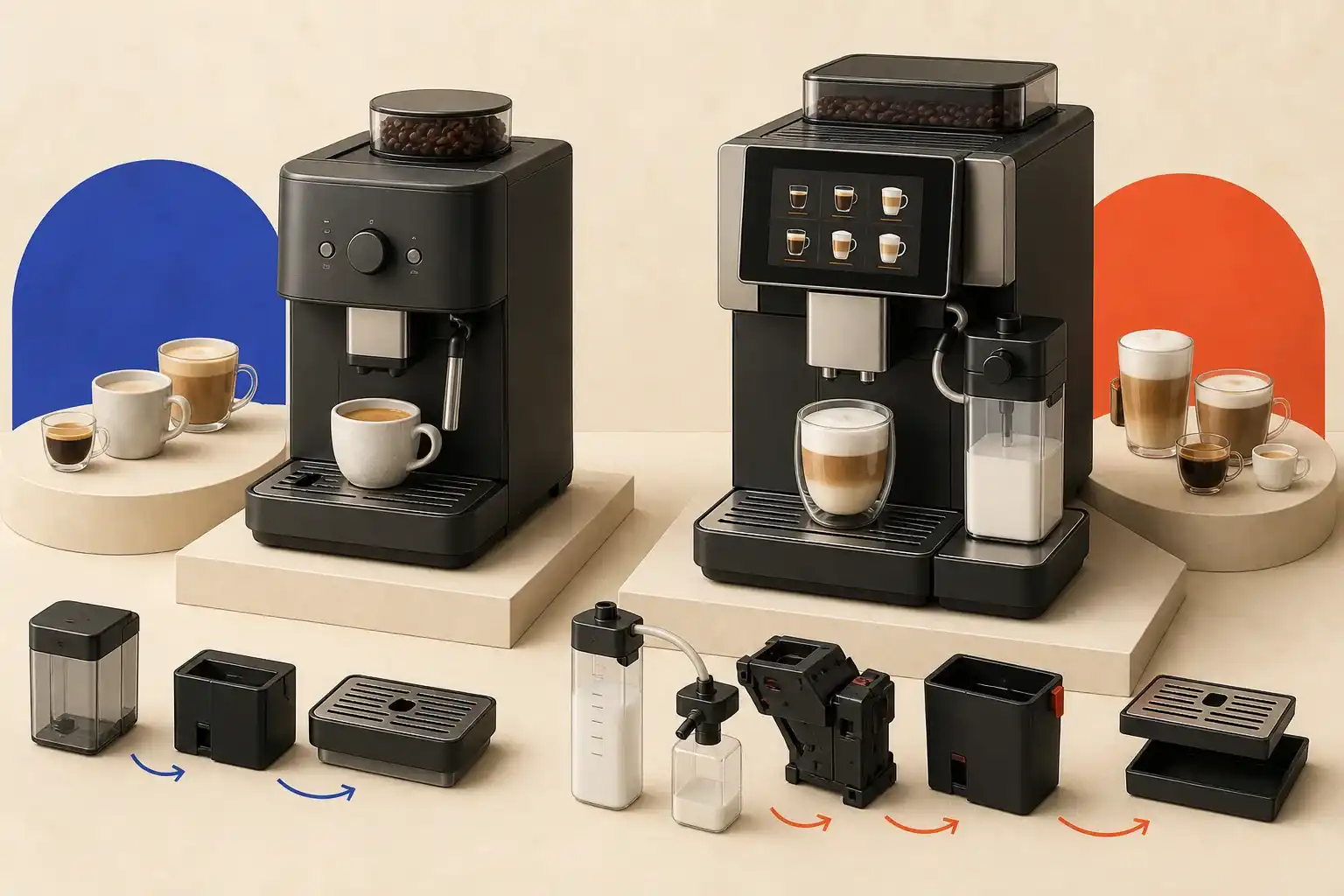
The Philips 3200 LatteGo EP3241/54 and Philips 3300 LatteGo EP3341/50 share the core appeal of a removable two-part milk system attached to a fully automatic espresso machine. Both grind beans internally, prepare coffee through a removable brew group, and send milk through the LatteGo container without a conventional tube. The 3300 adds newer convenience features rather than changing the fundamental ownership model.
For most buyers, the decision comes down to drink menu, iced-coffee use, noise sensitivity, and confidence in current support for the exact model. This comparison uses official documentation and does not claim hands-on taste or sound testing.
Philips 3200 vs 3300 overview
| Decision point | Philips 3200 EP3241/54 | Philips 3300 EP3341/50 |
|---|---|---|
| Published drink selection | Five core coffee and milk drinks | Six hot and iced drinks |
| Iced-coffee preset | Not the defining feature | Included in the published menu |
| Noise positioning | Earlier platform | SilentBrew sound shielding |
| Ready-state feature | Conventional startup | QuickStart positioning |
| Milk system | Two-part LatteGo | Two-part LatteGo |
| Grinder | Ceramic burr, adjustable settings | Ceramic burr, adjustable settings |
The table should not be read as a taste score. SilentBrew is a manufacturer design claim, not a promise that grinding will be quiet in every kitchen. QuickStart describes readiness and workflow, while the condition of the machine and its programmed rinse still affect what happens after power-on.
Match the drink menu to a normal week
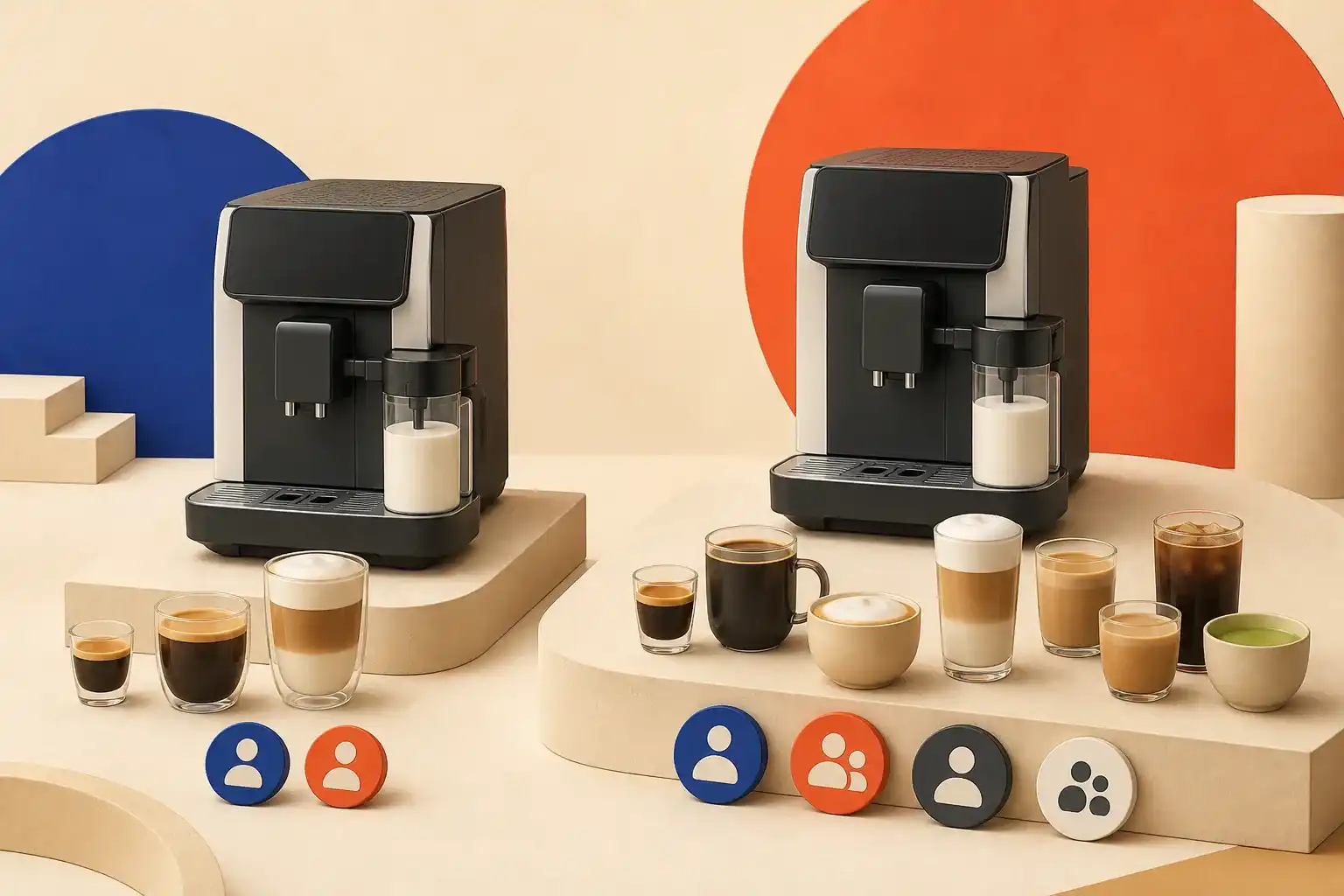
The Philips 3200 EP3241/54 covers espresso, coffee, Americano, cappuccino, and latte macchiato in the U.S. configuration. Those five drinks already span straight coffee and common milk drinks. If the household repeats these options, a longer menu may not improve the routine.
The Philips 3300 EP3341/50 expands the set to six hot and iced choices. Its iced-coffee program is the most obvious functional reason to prefer it. An iced preset adjusts the brewing sequence for coffee intended to be served over ice; it does not chill the water, make ice, or create café-style cold brew by long extraction.
Before buying, separate three ideas that are often grouped together: hot coffee poured over ice, concentrated cold extraction, and refrigerated steeped cold brew. The 3300’s program addresses the first. If true cold brew is a regular requirement, use a machine specifically supporting that process or a separate brewer.
Noise and early-morning use
Philips describes the 3300 with SilentBrew technology and a quieter operating claim relative to earlier products. The machine still contains a motorized grinder, pump, moving brew group, and automatic rinse. It will make audible mechanical sounds.
Noise sensitivity depends on the room. An open kitchen beside a bedroom presents a different problem than a closed kitchen on another floor. Hard counters and cabinets can reflect vibration. Keep the appliance level, make sure removable parts are seated, and do not use padding that blocks ventilation or creates instability.
The 3200 lacks the newer SilentBrew positioning but may remain acceptable where coffee is made after the household wakes. Without comparable independent measurements from the same environment, treat the claim as a design difference rather than a guaranteed decibel outcome.
QuickStart and the first drink
The 3300’s QuickStart feature is intended to reduce waiting before drink selection. That convenience matters most for a single morning cup. It matters less when several drinks are prepared in a row, because grinding, brewing, and milk delivery dominate the total session.
Both machines may perform rinsing or maintenance actions. Place a suitable container under the spouts when directed, keep the tray installed, and expect rinse water in the drip tray. Do not disable recommended cycles simply to save seconds.
If an outlet is controlled by a smart plug, do not assume cutting mains power is equivalent to the machine’s shutdown sequence. Automatic coffee machines may use startup and shutdown rinses and should be operated according to their instructions.
LatteGo milk workflow
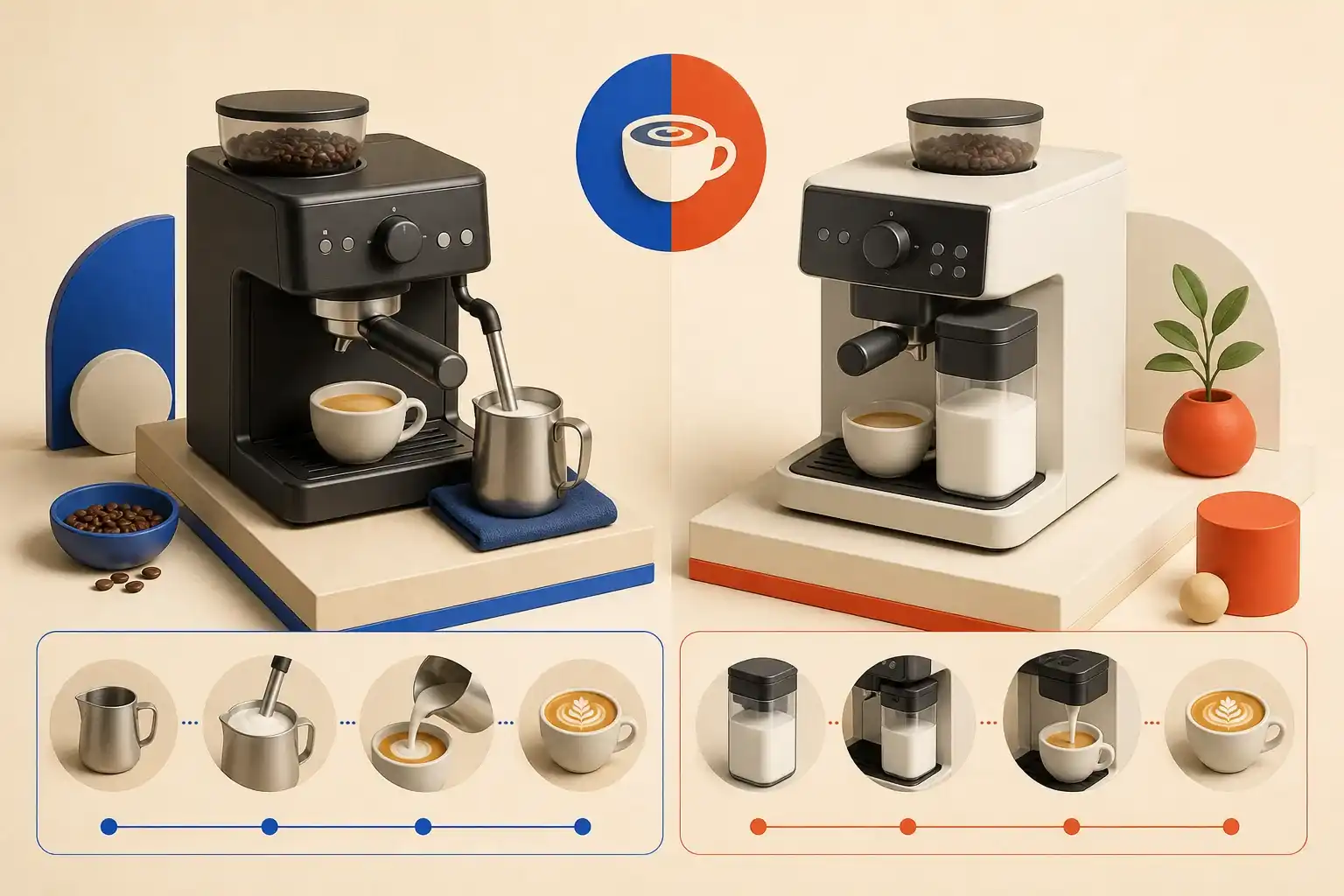
LatteGo uses a container and lid/channel assembly rather than a long internal milk tube. The parts separate for rinsing, and Philips identifies compatible components as dishwasher safe for the relevant models. Confirm the exact manual because regional configurations can differ.
The system still requires immediate milk hygiene. Use cold, fresh milk or an appropriate alternative, do not leave the filled container on the counter, and clean residue before it dries. Milk formulation affects foam. Protein level, temperature, and stabilizers can change the result even when two cartons carry the same general label.
The milk container has a practical capacity. A household making several large drinks may need to refill it. Check graduated markings instead of overfilling. The absence of a tube reduces one cleaning path, but it does not clean the coffee brew group, grounds bin, or internal water circuit.
Grinder adjustment and coffee changes
Both models use an adjustable ceramic grinder. The manufacturer’s manual defines when and how to turn the setting control. Adjust only while the grinder runs when instructed, move one step at a time, and allow several cups before judging the change.
A finer setting does not automatically mean stronger or better coffee. Too fine can slow flow and produce an unpleasant result; too coarse can run quickly and taste weak. Strength controls may alter the coffee dose, while volume changes water. Tune one variable at a time.
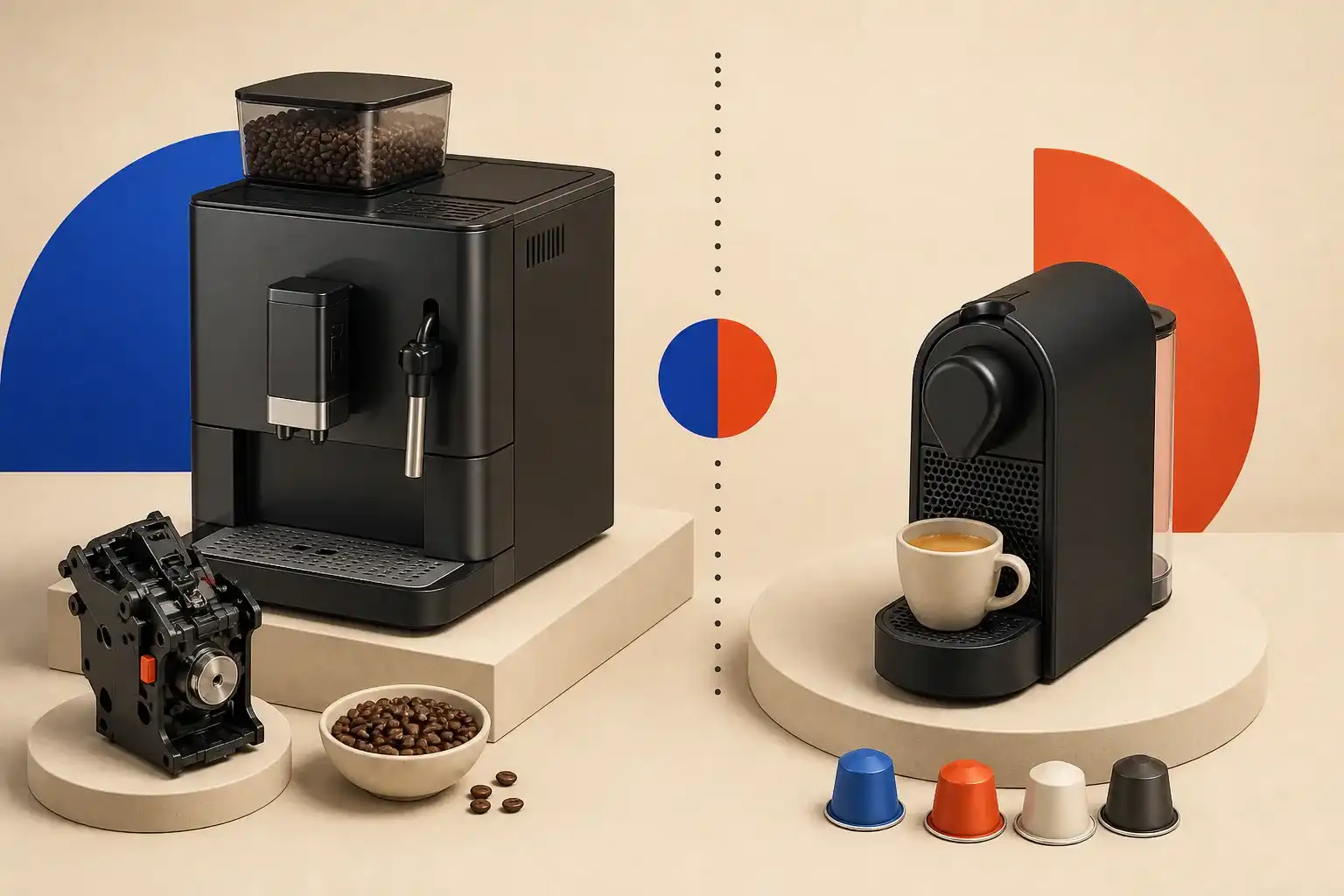
Hopper-based systems are designed around a primary bean. Frequent switches leave old beans and grounds in the path. The pre-ground compartment handles a limited bypass dose, not a second bulk supply. Never put instant coffee, wet grounds, or multiple scoops into the bypass chute.
Brew-group and coffee-path maintenance
The removable brew group is a central Philips ownership feature. Switch the machine to the state required by the manual before removal. Rinse with lukewarm water as directed, allow it to air-dry, and lubricate specified points on the published schedule. Detergent or a dishwasher can damage components unless explicitly allowed.
Empty the grounds container with the machine in the state Philips specifies so the counter resets correctly. Empty and wash the drip tray before residue accumulates. A tray that fills with rinse water during ordinary use is expected; water under the appliance is not.
Coffee-oil cleaning and descaling are separate jobs. A tablet used for coffee residue does not remove mineral scale, and descaler does not replace brew-group cleaning. Follow the prompts and use compatible supplies.
AquaClean and water hardness
Both models support Philips AquaClean filtration when installed and activated correctly. The headline cup interval associated with AquaClean is conditional on filter replacement and machine setup. It is not a promise that the machine never needs descaling.
Test water hardness, enter the setting, and activate each new filter through the proper menu. If the machine has been used without an activated filter, follow the instructions rather than inserting one and assuming the maintenance history resets.
Filtered water also changes coffee flavor. Water that is extremely hard or extremely soft can be challenging. Do not use distilled water unless the manufacturer explicitly allows it; sensors and extraction may depend on mineral content.
Size, access, and regional model checks
The 3200 and 3300 have similar narrow-front, deep-body proportions. Measure depth to the wall, cabinet height for the bean hopper, and front space for the water tank, tray, grounds container, and LatteGo cup. The brew group requires side access on the designated panel.
Confirm EP3241/54 or EP3341/50 on the Amazon listing. Philips sells many series combinations with small suffix differences, and a listing title may omit the regional code. Use a 120-volt U.S. model and match the official support page before ordering filters or parts.
The 3200 is an older platform. That does not by itself make it unsuitable, but check current manufacturer support, replacement parts, and listing seller. A low-friction purchase needs a clear warranty route as well as an available machine.
Who should choose each model?
The Philips 3200 EP3241/54 fits buyers satisfied with five established drinks who find a clearly supported U.S. unit and do not need an iced preset or newer noise controls. It can be a direct introduction to LatteGo ownership without paying for menu items that will not be used.
The Philips 3300 EP3341/50 fits shoppers who make iced coffee, brew near sleeping or working areas, or prefer the current six-drink interface. Its upgrades improve convenience, but the machine still demands the same categories of milk, brew-group, grounds, filter, and scale care.
Buying checklist
- Verify EP3241/54 or EP3341/50, U.S. voltage, and official support.
- Count which of the five or six drinks will be used weekly.
- Decide whether hot coffee over ice is the desired cold format.
- Treat SilentBrew as a design feature, not silence.
- Measure hopper, water-tank, brew-group, tray, milk-container, and mug clearance.
- Review LatteGo cleaning and refrigerator storage.
- Confirm AquaClean activation, replacement, and descaling requirements.
- Check current replacement parts and warranty handling.
The Philips 3300 is a practical refinement of the LatteGo routine, not a different category of machine. Choose it for its iced program, newer startup, and noise-focused design. Choose the 3200 only when its simpler menu and current support genuinely meet the same job.
Research shortlist
Products to consider
As an Amazon Associate I earn from qualifying purchases.These are research-based examples—not hands-on test results, promises of availability, or absolute rankings.
Philips 3200 LatteGo EP3241/54
An earlier LatteGo reference for buyers who want five core drinks and should weigh current support and availability against newer controls.
Philips 3300 LatteGo EP3341/50
A newer six-drink option for shoppers prioritizing quieter operation, quick start, and an iced-coffee preset while keeping the two-part LatteGo system.
Philips 3300 support and manuals
Sources reviewed
BestSift favors standards bodies, public agencies, official manuals, and primary manufacturer documentation. Accessed August 13, 2026.